

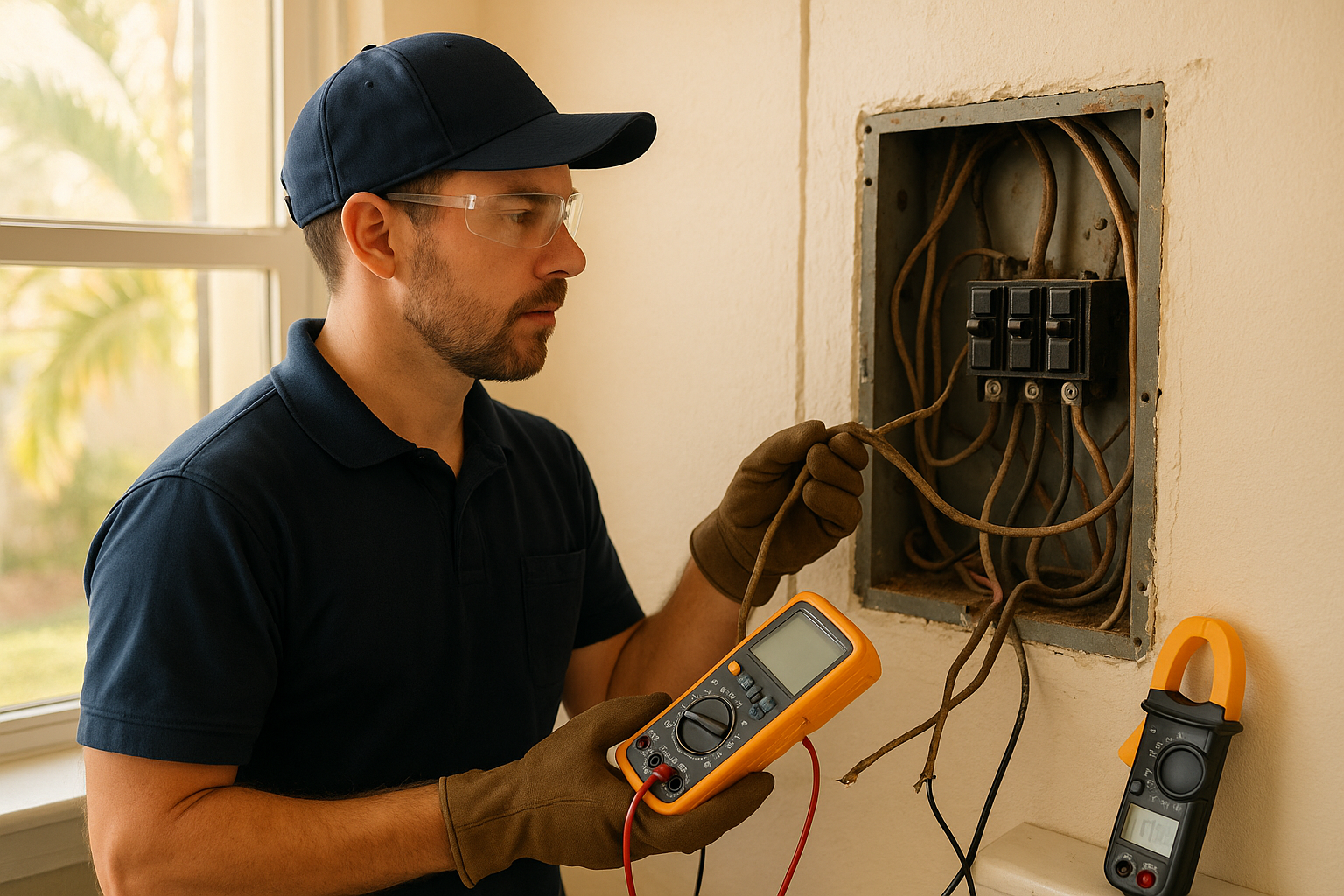
Many homeowners across Port Charlotte, Punta Gorda, and Sarasota wonder whether does old wiring use more electricity than modern electrical systems. After more than 20 years serving Southwest Florida families, we’ve inspected thousands of older homes and discovered that outdated wiring doesn’t just pose safety risks but can also quietly increase your monthly utility bills. Understanding how your home’s electrical infrastructure affects energy consumption helps you make informed decisions about upgrades and renovations.
Quick Answer: Old wiring itself doesn’t directly consume more electricity, but it creates inefficiencies that lead to higher energy usage. Deteriorated insulation, corroded connections, loose terminals, and inadequate wire gauge force your electrical system to work harder, generating heat waste and voltage drops. These inefficiencies typically add 10-25% to monthly electric bills while creating serious fire hazards in homes built before 1980.
What Is Old Wiring and How Does It Affect Energy Use?
Old wiring refers to electrical systems installed before modern safety codes were established, typically in homes built before the 1980s. However, the question of whether does old wiring use more electricity requires understanding the difference between the wire itself and the system’s overall efficiency.
Electrical wiring serves as a highway for power distribution throughout your home. When that highway develops problems, resistance increases, connections loosen, and insulation deteriorates. Therefore, while the copper or aluminum wire doesn’t inherently “use” electricity, degraded systems create resistance that converts electrical energy into wasted heat rather than powering your appliances efficiently.
In Southwest Florida’s humid climate, the aging process accelerates. Moreover, homes in Venice, Englewood, and North Port built during construction booms often used wiring methods that are now considered substandard. We regularly encounter knob-and-tube wiring, ungrounded systems, and undersized circuits that struggle with modern electrical demands.
According to the National Fire Protection Association, homes with wiring over 40 years old are significantly more likely to experience electrical fires, particularly when systems weren’t designed for today’s electrical loads. Additionally, these aging systems waste energy through several mechanisms that directly impact your monthly costs.
7 Ways Does Old Wiring Use More Energy in Your Home
1. Deteriorated Insulation Creates Resistance
Old wire insulation becomes brittle and cracks over time, especially in Florida’s heat and humidity. When insulation fails, wires can partially short or create increased resistance at multiple points throughout the system. Consequently, your electrical system must push harder to deliver the same amount of power, wasting energy as heat generation.
We’ve seen cloth-wrapped wiring from the 1950s and 1960s in Port Charlotte homes where the fabric has completely disintegrated. Furthermore, rubber insulation common in pre-1970s installations becomes gummy or brittle, exposing bare conductors that increase both safety risks and energy waste.
2. Corroded Connections Waste Power
Electrical connections naturally corrode over decades, particularly in coastal areas like Punta Gorda and Sarasota where salt air accelerates deterioration. Each corroded connection point creates resistance that converts electricity into heat rather than useful work.
Think of it like a kinked garden hose. The water still flows, but pressure drops and efficiency plummets. Similarly, corroded wire connections force your electrical system to work harder while delivering less effective power to your appliances. In fact, a single badly corroded connection can waste 50-100 watts continuously.
3. Undersized Wiring for Modern Loads
Most homes built before 1980 were wired for electrical loads one-quarter to one-third of what modern families require. When you run modern appliances, computers, air conditioning, and devices through undersized wiring, the cables heat up from excessive current flow.
This heating represents pure energy waste. Moreover, undersized circuits force appliances to work less efficiently because they receive inadequate voltage under load. Your refrigerator, HVAC system, and other major appliances consume significantly more energy when they don’t receive proper voltage due to wire gauge limitations.
4. Loose Terminal Connections Generate Heat
Over time, thermal cycling (heating and cooling as electrical loads change) causes terminal screws to loosen in outlets, switches, and breaker connections. These loose connections create arcing and resistance that generates substantial heat waste.
During inspections in Venice and Englewood, we routinely find outlet terminals so loose that visible scorch marks appear on the receptacle. These hot connections waste electricity continuously while creating fire hazards. Additionally, intermittent arcing at loose connections can damage sensitive electronics throughout your home.
5. Aluminum Wiring Expansion Issues
Homes built in the 1960s and early 1970s often contain aluminum branch circuit wiring, particularly in North Port and Port Charlotte developments from that era. Aluminum expands and contracts more than copper with temperature changes, gradually loosening connections over years.
These loose connections increase resistance dramatically. Furthermore, oxidation at aluminum connections creates an insulating layer that forces even more energy waste. The Consumer Product Safety Commission estimates that homes with aluminum wiring are 55 times more likely to reach fire hazard conditions at connections, largely due to resistance heating from poor connections.
6. Inadequate Grounding Creates Return Path Problems
Older two-wire systems without proper grounding force electrical current to find alternative return paths, sometimes through water pipes, gas lines, or other conductors. These improvised paths create additional resistance and energy waste throughout the system.
Proper grounding provides a low-resistance path that improves overall system efficiency. In contrast, ungrounded systems waste energy and create voltage irregularities that reduce appliance efficiency. When we perform electrical panel upgrades in older Southwest Florida homes, adding proper grounding systems often reduces monthly energy consumption by 8-15%.
7. Outdated Breakers and Panel Components
Circuit breakers and panel components from the 1960s-1980s develop internal resistance as contacts wear and mechanisms age. Federal Pacific, Zinsco, and early Square D panels particularly suffer from this issue, creating heat and energy waste at the main distribution point.
These aging panels also lack modern arc-fault and ground-fault protection that prevents energy waste from fault conditions. Consequently, minor electrical problems that modern breakers would immediately address continue wasting energy for years in homes with outdated panels.
How Does Old Wiring Use Affect Your Monthly Electric Bill?
The cumulative effect of old wiring inefficiencies appears directly on your utility statement each month. While the exact impact varies based on your home’s specific conditions, most homeowners with electrical systems over 40 years old pay 10-25% more than necessary for electricity.
For an average Southwest Florida home with a $200 monthly electric bill, outdated wiring could add $20-50 in wasted energy costs. Over a year, that’s $240-600 thrown away. Moreover, these costs increase as wiring continues to deteriorate and as you add more modern appliances that strain inadequate circuits.
Beyond the direct energy waste, old wiring forces appliances to work harder. Your air conditioning system, which represents 40-50% of summer cooling costs in Sarasota and Port Charlotte, runs significantly less efficiently when voltage drops under load. Refrigerators, water heaters, and other motor-driven appliances experience shortened lifespans and higher operating costs when powered through deteriorated wiring.
We’ve documented cases where homeowners saw immediate 15-20% reductions in monthly electric bills after whole-house rewiring projects. Therefore, the cost of updating old wiring often pays for itself within 5-8 years through energy savings alone, before considering the safety benefits and increased home value.
Furthermore, insurance companies increasingly require electrical updates for older homes, particularly in North Port, Venice, and Englewood where many properties date from the 1960s-1970s construction boom. Some insurers offer premium discounts of 5-15% for homes with completely updated electrical systems, adding to the financial benefits.
What Are the Warning Signs Your Old Wiring Is Wasting Energy?
Recognizing the symptoms of inefficient old wiring helps homeowners take action before safety hazards develop and energy waste continues mounting.
First, flickering or dimming lights when major appliances start indicates voltage drop from inadequate wiring or poor connections. This symptom means your electrical system struggles to deliver consistent power, wasting energy and reducing appliance efficiency. We see this frequently in Port Charlotte homes when air conditioning compressors start, temporarily dimming lights throughout the house.
Second, warm or discolored outlets and switch plates signal resistance heating at connections. If you can feel warmth on a switch plate or outlet cover, electrical energy is being wasted as heat at that connection point. Additionally, brown or black discoloration around outlets indicates serious overheating that requires immediate attention.
Third, frequently tripping breakers or blown fuses suggest circuits are overloaded relative to their capacity. While this seems like a safety feature working correctly, it actually indicates your wiring system cannot efficiently handle your electrical needs, forcing you to redistribute loads manually or run fewer appliances simultaneously.
Fourth, a burning smell or buzzing sounds from outlets, switches, or the electrical panel indicate serious connection problems creating heat and energy waste. These symptoms require emergency attention, as they typically precede electrical fires. Indeed, we respond to emergency calls in Punta Gorda and Sarasota where homeowners ignored these warning signs until smoke appeared.
Fifth, an unusually high electric bill without corresponding usage increases often indicates system inefficiency. If your habits haven’t changed but costs keep climbing, your electrical infrastructure may be deteriorating. Compare your per-kilowatt-hour usage year-over-year to identify unexplained increases.
Finally, two-prong outlets throughout your home indicate an ungrounded system that both wastes energy and lacks modern safety features. These outlets tell you the electrical system predates 1960s code requirements and desperately needs updating.
How Much Does Electrical System Updating Cost in Southwest Florida?
Understanding the investment required to address old wiring helps homeowners budget appropriately and make informed decisions. The costs vary significantly based on your home’s size, existing conditions, and the extent of required updates.
Partial rewiring for specific problem circuits typically costs $1,500-$4,500 for Southwest Florida homes. This approach addresses the most critical safety issues and energy waste while postponing comprehensive updates. For example, rewiring just the kitchen and laundry circuits in a North Port home might cost $2,200-3,800, immediately improving safety and efficiency in high-load areas.
Whole-house rewiring for a typical 1,500-2,000 square foot home runs $8,000-$15,000 in the Port Charlotte and Venice areas. This comprehensive approach brings the entire electrical system to modern code standards, maximizes energy efficiency, and typically increases home value by 1.5-3 times the project cost. Moreover, complete rewiring eliminates all hidden safety hazards and energy waste from deteriorated old wiring.
Electrical panel replacement alone costs $1,500-$3,500 for most Southwest Florida homes, depending on amperage requirements and whether the service entrance needs updating. Since the panel represents the heart of your electrical system, upgrading from an outdated 60-100 amp panel to a modern 200 amp service dramatically improves efficiency and capacity.
Adding proper grounding and surge protection to an older home typically costs $800-$2,500 as part of broader electrical updates. These features protect sensitive electronics while improving system efficiency and safety. In fact, whole-home surge protection often pays for itself by preventing damage to computers, televisions, and appliances during Florida’s frequent thunderstorms.
Financing options make these critical safety and efficiency investments manageable for most families. Additionally, energy savings of $240-600 annually help offset the project cost over time. Some utility companies offer rebates for electrical efficiency upgrades, further reducing your net investment.
Why Choose Professional Electrical Assessment for Old Wiring?
Attempting to diagnose whether does old wiring use excessive energy without professional expertise risks missing hidden hazards while failing to identify all efficiency problems. Comprehensive electrical inspections reveal issues invisible to homeowners and provide actionable roadmaps for improvements.
Professional electricians use thermal imaging cameras to identify hot connections and overloaded circuits without opening walls. These tools detect temperature anomalies that indicate energy-wasting resistance and safety hazards. Furthermore, voltage drop testing throughout your home’s circuits precisely measures efficiency losses and helps prioritize which circuits need immediate attention.
Licensed contractors also understand local code requirements specific to Southwest Florida, ensuring upgrades meet both safety standards and insurance requirements. Municipalities in Sarasota, Port Charlotte, and Punta Gorda have specific permitting and inspection processes that only licensed professionals can navigate efficiently.
Moreover, experienced electricians recognize specific hazards common to Southwest Florida homes from different construction eras. We know which developers cut corners in 1970s North Port subdivisions, which Venice neighborhoods contain problematic aluminum wiring, and which Englewood areas suffered from unlicensed work during boom periods.
Professional assessments also consider your future needs, not just current problems. If you’re planning to add an electric vehicle charger, pool equipment, or home additions, your electrical evaluation should account for these anticipated loads. Proper planning prevents costly rework and ensures your upgraded system serves you for decades.
Frequently Asked Questions About Does Old Wiring Use More Electricity
Does old wiring use more electricity than new wiring?
Old wiring doesn’t directly consume electricity, but deteriorated connections, corroded terminals, and inadequate wire sizing create resistance that wastes energy as heat. These inefficiencies typically increase monthly electric bills by 10-25% compared to modern, properly maintained electrical systems.
How can I tell if my old wiring is wasting energy?
Warning signs include flickering lights when appliances start, warm outlet covers, frequently tripping breakers, unexplained increases in electric bills, and visible discoloration around outlets or switches. Any of these symptoms indicates your electrical system is working inefficiently and requires professional evaluation.
When should I replace old electrical wiring?
Replace wiring immediately if you notice burning smells, sparking, scorched outlets, or if your home has knob-and-tube, ungrounded two-wire, or aluminum branch circuit wiring. Additionally, homes over 40 years old without electrical updates should receive comprehensive inspections to identify hidden hazards and efficiency problems.
Will rewiring my house reduce my electric bill?
Yes, eliminating resistance from corroded connections, undersized wiring, and deteriorated insulation typically reduces monthly electric bills by 10-25%. Many Southwest Florida homeowners see immediate savings of $20-50 monthly after comprehensive electrical updates, with the project paying for itself through energy savings within 5-8 years.
Can I just replace outlets instead of rewiring?
Replacing outlets addresses only visible symptoms while leaving underlying wiring problems intact. Deteriorated wire insulation, inadequate circuit capacity, and corroded connections inside walls continue wasting energy and creating hazards regardless of new outlets. Comprehensive assessment determines whether surface fixes suffice or whether deeper electrical system updates are necessary.
Does aluminum wiring waste more electricity than copper?
Aluminum wiring itself conducts electricity efficiently, but aluminum connections oxidize and loosen over time, creating resistance that wastes energy. Homes with aluminum wiring experience significantly higher connection resistance at outlets, switches, and breakers compared to copper systems, resulting in both energy waste and fire hazards.
How much energy does old wiring waste annually?
For an average Southwest Florida home with a $2,400 annual electricity cost, old wiring typically wastes $240-600 per year through resistance heating, voltage drops, and reduced appliance efficiency. Larger homes with higher electrical consumption waste proportionally more, while severe deterioration can push waste above 30% of total electrical costs.
Trust Caliber Electric for Old Wiring Assessment and Upgrades
If you’re wondering whether does old wiring use excessive electricity in your Port Charlotte, North Port, Punta Gorda, Venice, Englewood, or Sarasota home, our family-owned team brings more than 20 years of experience diagnosing and resolving electrical efficiency and safety issues. We’ve helped thousands of Southwest Florida families upgrade outdated electrical systems, immediately improving both safety and energy efficiency while reducing monthly utility costs.
Our fully licensed electricians provide comprehensive electrical assessments using thermal imaging and diagnostic equipment to identify exactly where your system wastes energy. We explain findings in clear terms, prioritize recommendations based on safety and cost-effectiveness, and provide transparent pricing before any work begins. Moreover, we handle all permitting and inspections, ensuring your electrical upgrades meet current code requirements and insurance standards.
Whether you need a simple electrical safety inspection, targeted circuit updates, or complete home rewiring, Caliber Electric delivers the craftsmanship and reliability that only a local, family-owned contractor can provide. Contact us today for a thorough electrical assessment and discover exactly how much your old wiring may be costing you each month in wasted energy and hidden safety risks.