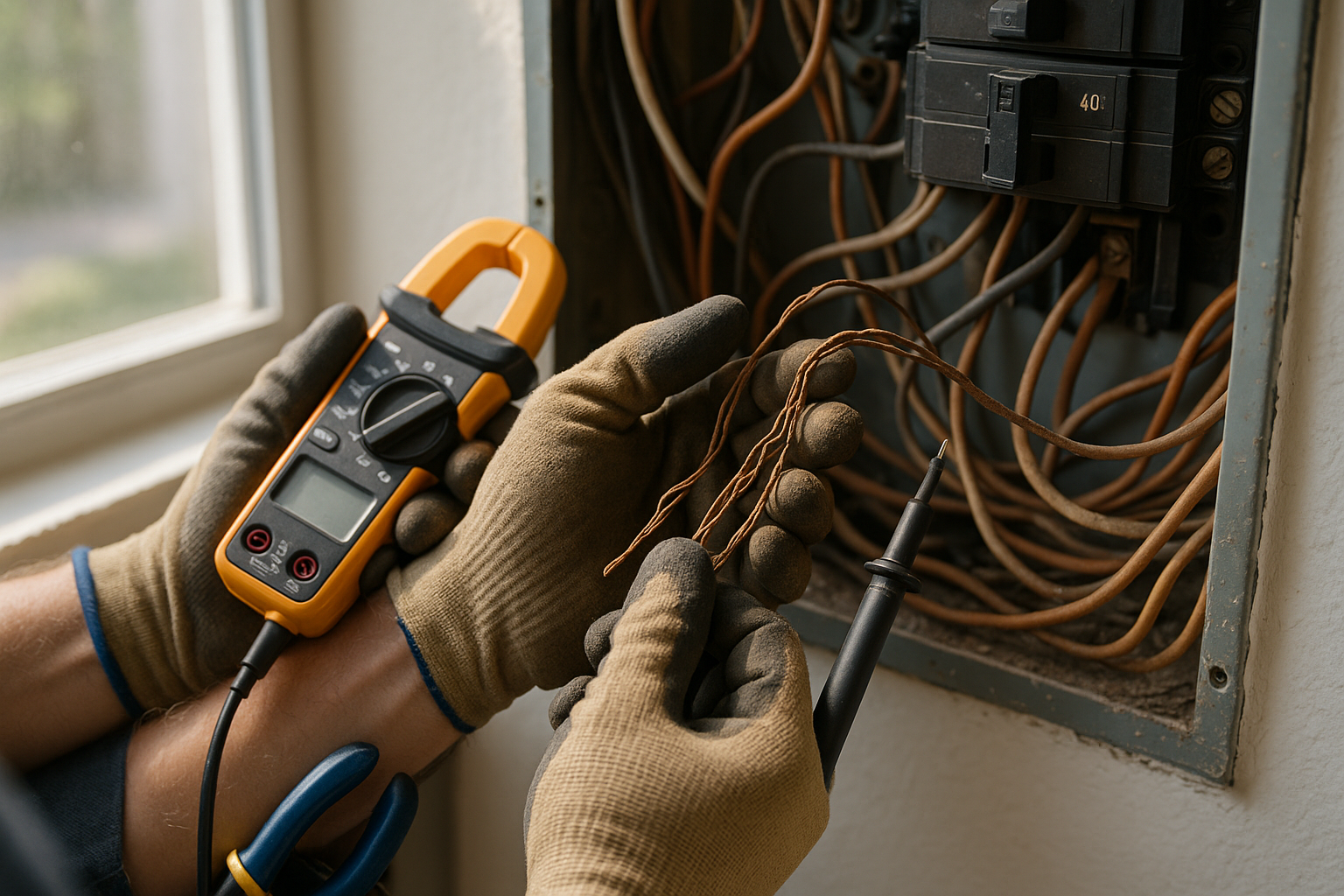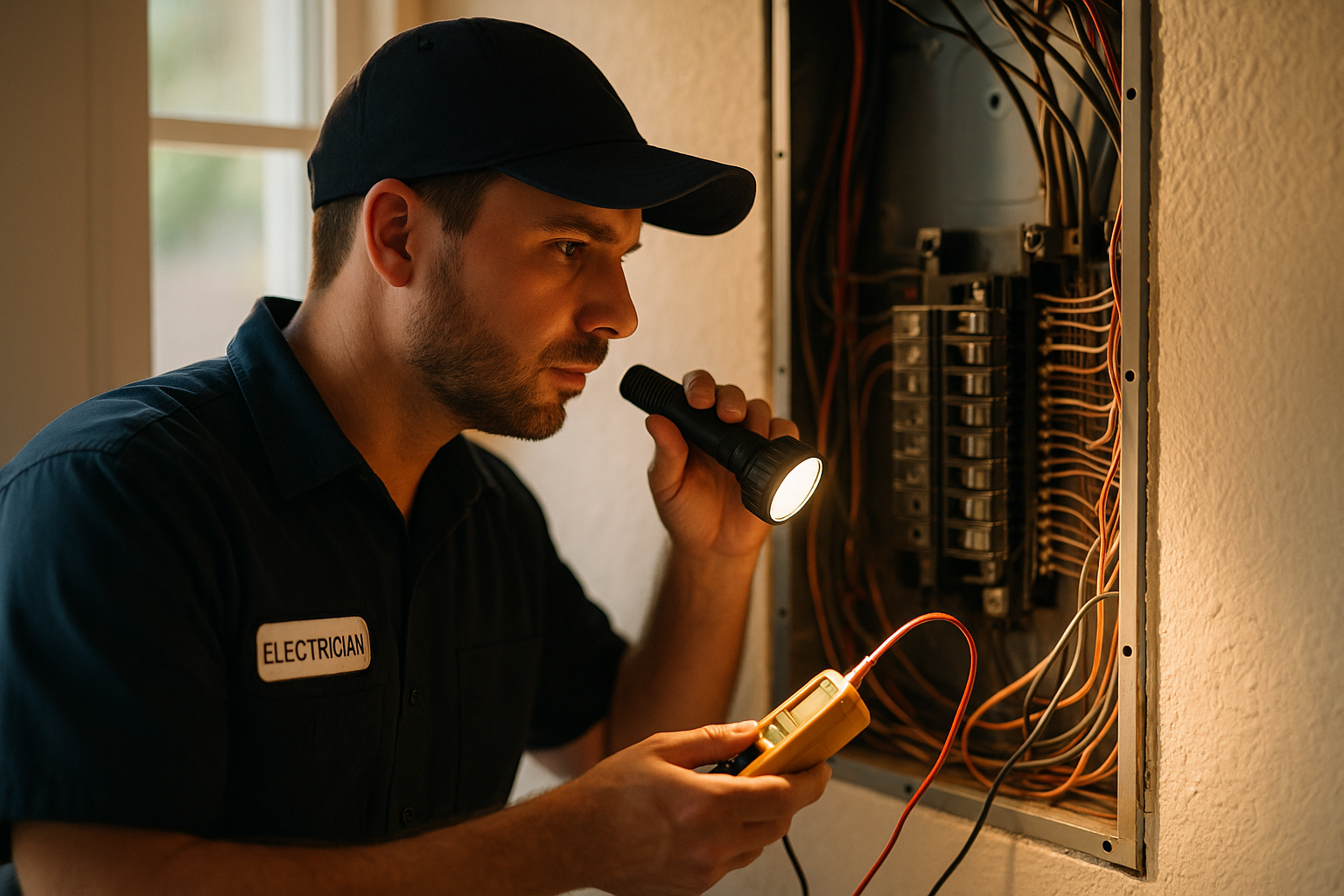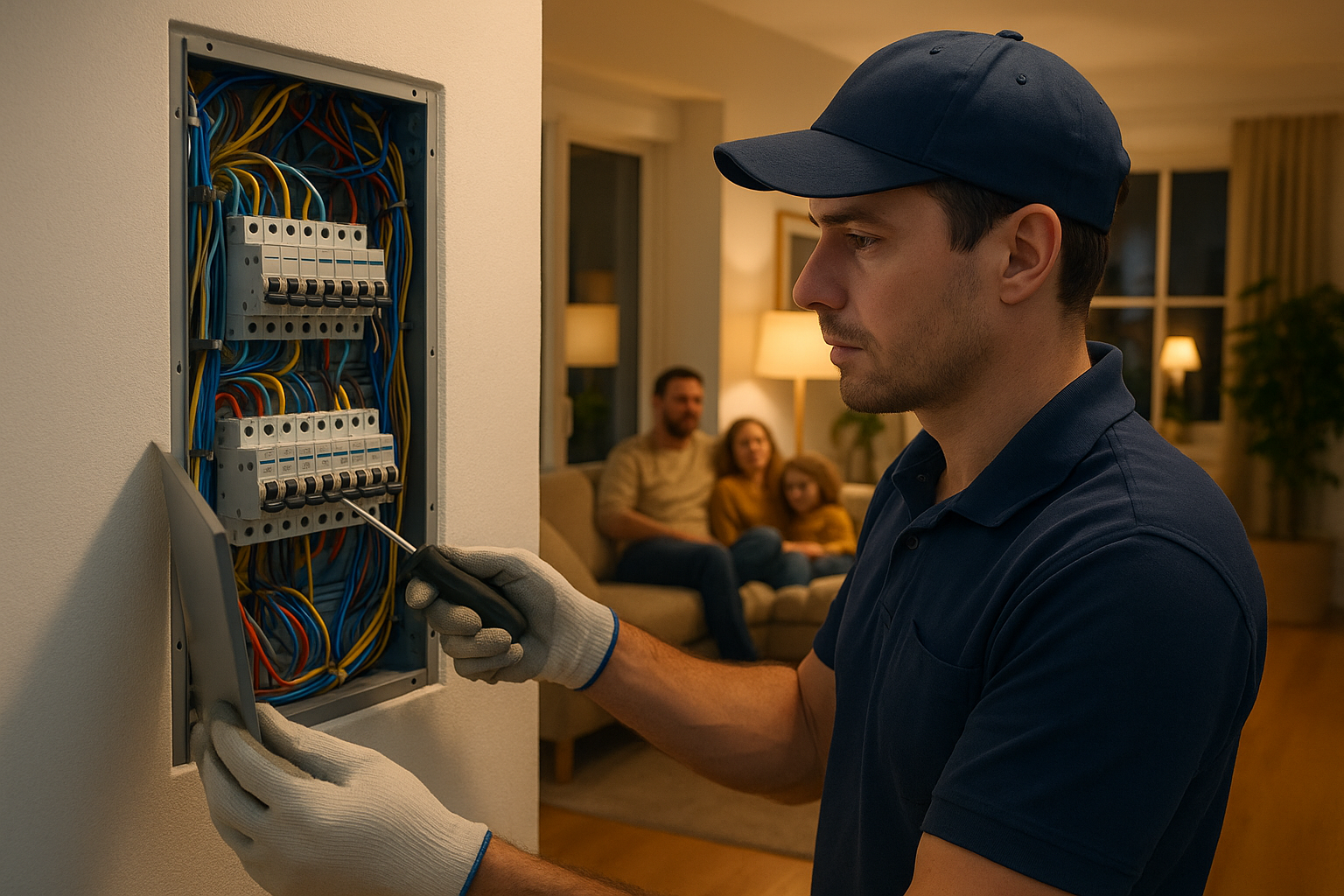


Finding qualified electricians for your home can feel overwhelming, especially when safety and code compliance are on the line. After more than 20 years serving homeowners across Port Charlotte, North Port, Punta Gorda, Venice, Englewood, and Sarasota, we’ve seen what happens when homeowners hire the wrong contractor. This guide walks you through exactly what to look for when choosing an electrical professional for your home.
Quick Answer: Choosing electricians involves verifying state licensing, confirming insurance coverage, checking references and reviews, and ensuring they pull proper permits. Licensed electricians must pass rigorous exams, carry liability insurance, and follow Florida electrical codes. Always request written estimates, verify credentials through Florida’s Department of Business and Professional Regulation, and avoid contractors who offer unusually low bids or discourage permits.
What Are Licensed Electricians and Why Do They Matter?
Licensed electricians are professionals who have completed state-required training, passed comprehensive examinations, and maintain active credentials through Florida’s Department of Business and Professional Regulation. In fact, Florida law requires anyone performing electrical work to hold proper licensing, ensuring they understand current electrical codes, safety protocols, and installation standards.
The licensing requirement exists to protect homeowners from faulty work that could cause fires, electrocution, or property damage. Moreover, licensed professionals carry insurance that covers accidents and errors, while unlicensed workers leave homeowners liable for injuries and repairs. When you hire a licensed contractor, you’re investing in safety, code compliance, and long-term reliability.
Furthermore, licensed electricians stay current with evolving technology. As homes add EV chargers, solar panels, and smart home systems, proper installation requires up-to-date knowledge that only continuing education and active licensing provide.
8 Essential Factors to Consider When Choosing Electricians
1. State Licensing and Credentials
First and foremost, verify that any electrical contractor holds an active Florida license. You can confirm credentials through the Florida Department of Business and Professional Regulation website, which shows license status, expiration dates, and any disciplinary actions. Licensed contractors will readily provide their license number and encourage you to verify it.
In addition, ask about specific certifications. For example, Tesla-certified installers have specialized training for EV chargers, while Generac-certified technicians understand whole-home generator systems. These additional credentials demonstrate commitment to ongoing education.
Never hire an unlicensed contractor, regardless of price. Consequently, you risk code violations, failed inspections, insurance claim denials, and dangerous installations that could harm your family or reduce your home’s value.
2. Insurance Coverage
Every reputable electrical contractor carries both general liability insurance and workers’ compensation coverage. Indeed, liability insurance protects your property if something goes wrong during installation, while workers’ comp covers injuries to crew members on your property.
Request certificates of insurance directly from the contractor’s insurance company. Therefore, you’ll confirm current coverage rather than relying on expired documents. Additionally, call the insurance provider to verify the policy is active and covers the specific work you’re planning.
Uninsured contractors put your home and finances at serious risk. As a result, you could be held liable for injuries, property damage, or medical bills if an accident occurs during the project.
3. Experience with Your Specific Project Type
Not all electricians specialize in the same services. For instance, panel upgrades require different expertise than EV charger installation or generator hookups. Therefore, ask how many similar projects the contractor has completed recently.
In Port Charlotte and surrounding areas, many homes were built 20 to 40 years ago with 100-amp or 150-amp panels. Consequently, panel upgrades to 200-amp service are common when adding major appliances, EV chargers, or home additions. An experienced contractor will understand local permitting requirements, utility company coordination, and hurricane-specific code requirements.
Similarly, emergency electrical repairs demand different skills than new construction work. Make sure your contractor has proven experience with the specific service you need.
4. References and Online Reviews
Check multiple review platforms including Google, Yelp, Facebook, and the Better Business Bureau. Furthermore, pay attention to how contractors respond to negative reviews. Professional companies address concerns promptly and professionally, while problematic contractors ignore complaints or respond defensively.
Request references from recent projects similar to yours. Then, follow up with those homeowners to ask about timeliness, communication, cleanup, and overall satisfaction. Additionally, ask if the contractor resolved any unexpected issues fairly and promptly.
Local reputation matters significantly in communities like Punta Gorda and Venice. Family-owned businesses that have served the area for decades depend on word-of-mouth referrals, which naturally encourages quality work and customer service.
5. Permit Practices
Legitimate electrical work requires permits from your local building department. However, some contractors discourage permits to save time or hide substandard work. This creates serious problems when you sell your home, file insurance claims, or experience electrical failures.
Always insist on proper permits for panel upgrades, service changes, EV charger installations, generator hookups, and major repairs. The contractor should handle permit applications, schedule inspections, and provide you with signed-off documentation when work is complete.
If a contractor suggests skipping permits to save money, walk away immediately. On the other hand, reputable professionals understand that permits protect both the homeowner and their business reputation.
6. Written Estimates and Contracts
Request detailed written estimates from at least three contractors before making a decision. The estimate should itemize labor, materials, permits, inspection fees, and any additional costs. Similarly, the contract should specify start and completion dates, payment terms, warranty information, and cleanup responsibilities.
Unusually low bids often signal cut corners, substandard materials, or hidden fees that appear later. In contrast, comprehensive estimates may cost more upfront but prevent surprise charges and ensure quality materials.
Never pay the full amount upfront. Instead, typical payment schedules involve a deposit (usually 10-25%), progress payments during the project, and final payment after inspection approval.
7. Communication and Professionalism
Pay attention to how contractors communicate from the first contact. Do they return calls promptly? Do they answer questions clearly without pressuring you? Professional electricians explain work in terms homeowners understand, provide realistic timelines, and keep you informed about progress.
Additionally, notice how crew members present themselves. Clean uniforms, organized trucks, and respectful behavior indicate a company that values professionalism. Conversely, unprofessional communication or appearance often reflects work quality.
For complex projects like whole-home generator installations or service upgrades, clear communication becomes even more critical. You should understand exactly what work will be performed, how long it will take, and what disruptions to expect.
8. Local Knowledge and Service Area
Electricians who regularly serve Port Charlotte, North Port, Englewood, and Sarasota understand regional challenges including hurricane preparedness, saltwater corrosion concerns, and local code variations. Furthermore, local contractors can respond quickly for follow-up service or warranty work.
Family-owned businesses with deep community roots have strong incentives to maintain their reputation. As a result, they’re more likely to stand behind their work long after the initial installation. Moreover, local contractors understand which building departments require specific documentation and how to navigate municipal permitting efficiently.
How Much Does It Cost to Hire Electricians in Southwest Florida?
Electrical service costs vary significantly based on project complexity, materials, and labor requirements. However, understanding typical pricing helps you identify fair estimates and avoid both overpriced and suspiciously cheap bids.
Basic service calls for minor repairs typically range from $125 to $250 for the initial visit and diagnosis. Then, repairs are billed hourly (usually $75 to $150 per hour) or as a flat rate for common fixes. For example, replacing a standard outlet might cost $150 to $200, while troubleshooting a tripping breaker could run $200 to $400 depending on the underlying cause.
Panel upgrades from 100-amp to 200-amp service generally cost $2,500 to $4,500 in Port Charlotte and surrounding areas. This includes the new panel, meter socket, labor, permits, and inspections. Additionally, costs increase if your utility company requires service line upgrades or if your home needs updated grounding systems to meet current codes.
EV charger installations typically range from $800 to $2,500 depending on charger type, circuit amperage, and installation location. Similarly, whole-home generator installations cost $6,000 to $15,000 including equipment, transfer switch, gas line connection, permits, and startup service.
Emergency service calls outside normal business hours usually include premium rates, often 1.5 to 2 times standard pricing. Therefore, non-urgent repairs should wait for regular business hours when possible.
Always compare written estimates carefully. If one bid is significantly lower than others, ask specifically what’s different. The contractor may be cutting corners, using inferior materials, or planning to add charges later.
What Are the Red Flags When Choosing Electricians?
Certain warning signs should immediately disqualify a contractor from consideration. First, any contractor who discourages permits or inspections should be avoided completely. Permits exist to ensure safety and code compliance, and only unlicensed or unethical contractors try to skip them.
Second, pressure tactics or demands for full payment upfront indicate potential scams. Legitimate contractors never require 100% payment before starting work. Instead, they follow standard payment schedules tied to project milestones.
Third, contractors who can’t provide proof of insurance or won’t let you verify their license are either uninsured, unlicensed, or both. Consequently, hiring them puts your property and finances at serious risk.
Fourth, vague estimates without itemized costs often lead to disputes and surprise charges. Professional contractors provide detailed breakdowns so you know exactly what you’re paying for.
Fifth, no physical business address or only a P.O. box suggests an unstable or potentially fraudulent operation. Family-owned businesses with established locations demonstrate commitment to the community.
Sixth, contractors who show up in unmarked vehicles or without uniforms may be unlicensed handymen rather than professional electricians. Additionally, this makes it difficult to verify who’s working in your home.
Finally, be wary of contractors who can start immediately on large projects. Reputable electricians typically schedule work weeks in advance, especially during busy seasons. If someone’s calendar is completely empty, it may indicate they’re new, struggling to find work, or not in demand due to poor quality.
Why Experience and Family Values Matter When Choosing Electricians
Electrical work directly impacts your family’s safety, making contractor selection a critical decision. Family-owned businesses that have served communities for decades understand this responsibility deeply. Moreover, they build reputations over generations rather than prioritizing short-term profits.
At Caliber Electric, we’ve spent more than 20 years earning trust throughout Port Charlotte, North Port, Punta Gorda, Venice, Englewood, and Sarasota. Our family-owned company treats every home like it’s our own because community reputation and customer relationships matter more than quick jobs.
Furthermore, experienced contractors recognize problems before they become emergencies. For instance, during routine panel inspections, we often identify outdated wiring, improper grounding, or overloaded circuits that homeowners didn’t know existed. Early detection prevents fires, equipment damage, and costly emergency repairs.
Long-term relationships also mean better service after installation. When you need follow-up support, warranty service, or additional electrical work, you’ll work with the same trusted team rather than searching for a new contractor each time.
Frequently Asked Questions About Choosing Electricians
How do I verify an electrician’s license in Florida?
Visit the Florida Department of Business and Professional Regulation website and search by name or license number. The database shows license status, expiration dates, and any disciplinary actions. Licensed electricians should provide their license number readily.
Should I get multiple estimates before hiring an electrician?
Yes, request written estimates from at least three licensed contractors for any major project. This helps you understand fair pricing, compare approaches, and identify unusually high or suspiciously low bids that may indicate problems.
Do all electrical projects require permits?
Most significant electrical work requires permits including panel upgrades, service changes, EV charger installations, generator hookups, and adding new circuits. Minor repairs like replacing existing outlets typically don’t require permits. Your contractor should advise you on permit requirements.
What insurance should electricians carry?
Professional electrical contractors must carry both general liability insurance and workers’ compensation coverage. Request certificates of insurance and verify coverage directly with the insurance company before work begins.
How much should I pay upfront for electrical work?
Never pay the full amount before work starts. Typical deposits range from 10% to 25% of the total project cost, with additional payments tied to project milestones and final payment after successful inspection.
What questions should I ask before hiring an electrician?
Ask about licensing, insurance, experience with your specific project type, references, permit procedures, warranty terms, and estimated timeline. Additionally, request a detailed written estimate and verify all information independently.
Can unlicensed handymen do electrical work in Florida?
No, Florida law requires anyone performing electrical work to hold proper state licensing. Hiring unlicensed workers puts you at risk for code violations, safety hazards, insurance claim denials, and liability for accidents.
Trust Caliber Electric for Professional Electrical Service
Choosing the right electricians protects your home, your family, and your investment. For more guidance on making this important decision, read our complete guide on how to choose electricians for homeowners, which provides additional details on credentials, contracts, and evaluation criteria.
At Caliber Electric, we’ve built our family business on trust, quality workmanship, and community relationships spanning more than two decades. We’re fully licensed, insured, and committed to serving Port Charlotte, North Port, Punta Gorda, Venice, Englewood, and Sarasota with the highest standards of electrical service. Whether you need a panel upgrade, EV charger installation, whole-home generator, emergency repairs, or surge protection, our experienced team treats your home with the same care we’d give our own. Contact Caliber Electric today for a detailed estimate and experience the difference that local expertise and family values make.