

If you’ve lived in Southwest Florida for more than one hurricane season, you know how disruptive power outages can be. The heat, spoiled food, sump pumps that stop, and medical devices that go dark make backup power essential. For many families, a generator is not a luxury—it’s a safety necessity.
Whole-home standby generators are among the most requested electrical installations at Caliber Electric. This guide explains how they work, what they cost, how installation works, and what questions to ask before you commit.
Standby Generator vs. Portable Generator
Most people start with a portable generator. It runs on gasoline, and you drag it out during an outage. You plug in extension cords to power a refrigerator or a window AC unit. These generators work temporarily but have limits: manual startup, unsafe for indoor use, fast fuel consumption, and inability to power an entire home.
A standby generator, by contrast, is permanently installed. It connects to your electrical panel and natural gas or propane supply. It starts automatically within 10–20 seconds when power goes out and shuts off when power returns. Standby generators can power central AC, well pumps, medical devices, and appliances without extension cords or manual effort. Serious homeowners rely on them to avoid risks during storm season.
What Size Generator Do You Need?
Correct sizing is crucial. Too small, and it won’t power essential devices. Too large, and you overspend.
Sizing depends on your home’s electrical load and what you want to run:
- Essential circuits (partial backup): 11–16 kW powers lights, fridge, a few outlets, and a small AC unit. Ideal for homes under 2,000 sq ft.
- Full backup (smaller homes): 20–22 kW runs a 1,800–2,500 sq ft home with central AC.
- Full backup (larger homes): 24–26 kW or larger is needed for homes over 2,500 sq ft, multiple AC systems, or heavy electrical loads.
An electrician should perform a load calculation to determine the proper size.
How Does Installation Work?
Standby generator installation involves several components:
- Generator Placement: Installed on a concrete pad outside the home, away from windows, doors, and gas meters.
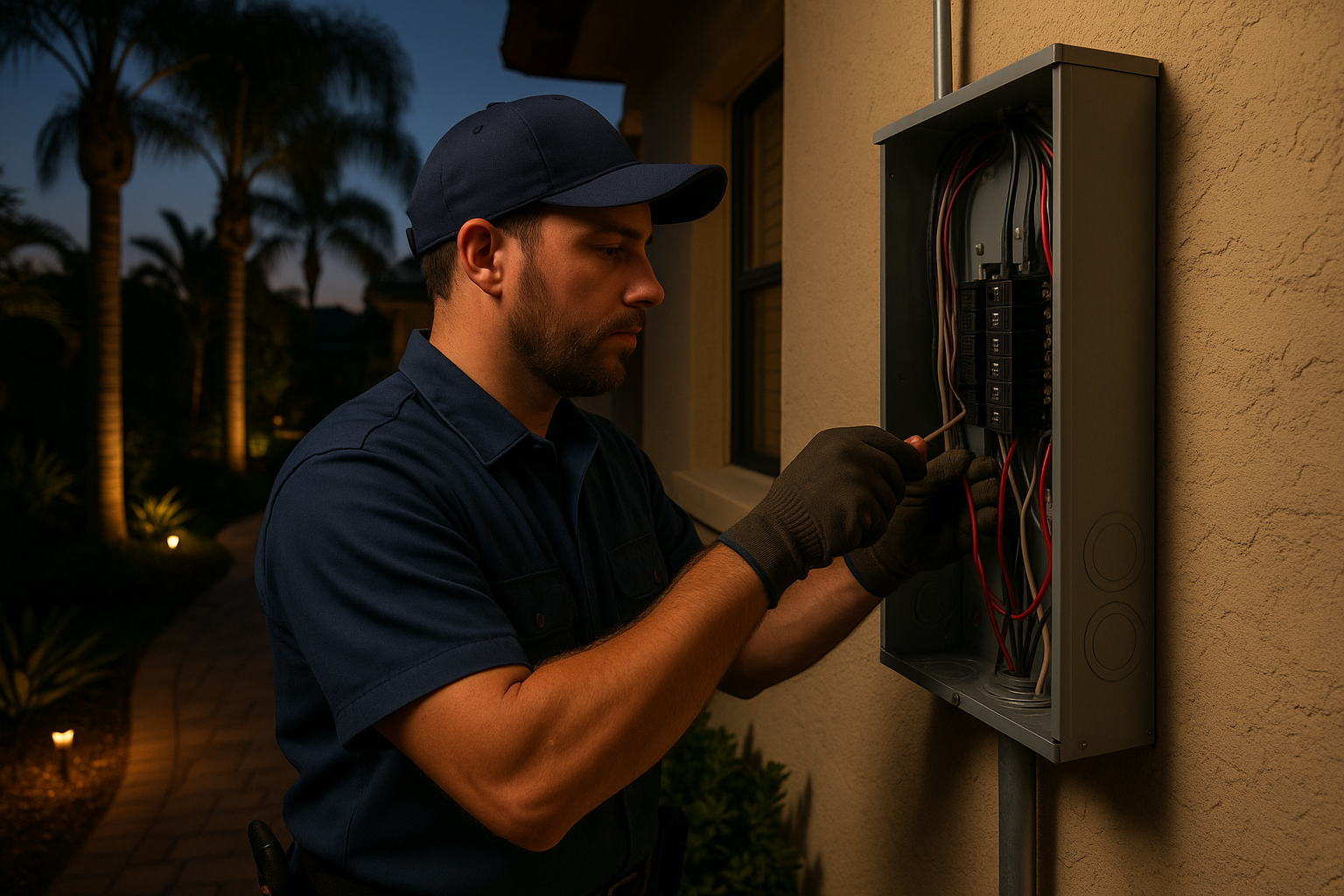
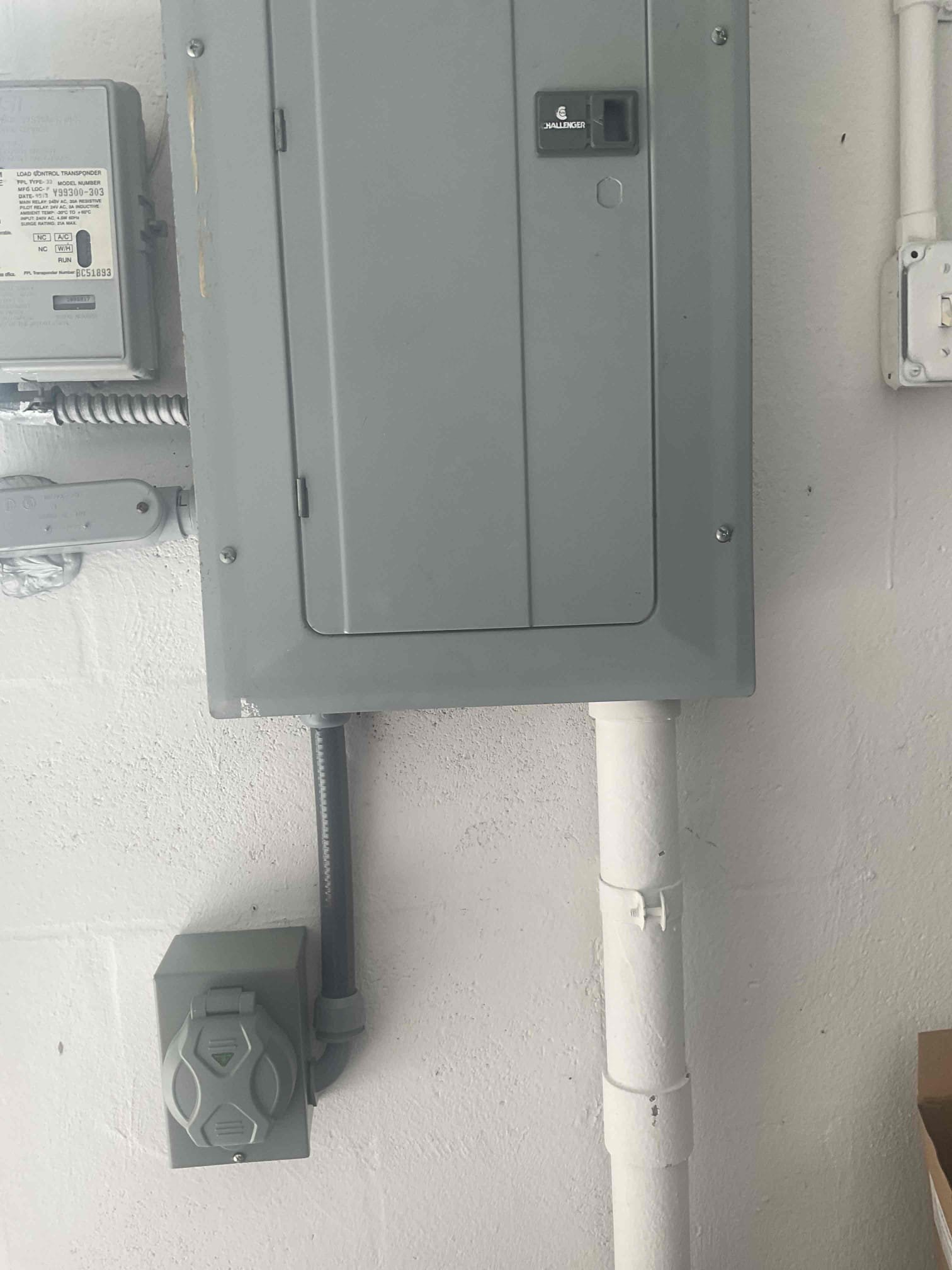
- Automatic Transfer Switch (ATS): Connected to your electrical panel, it detects outages and switches your home to generator power. It switches back automatically when utility power returns.
- Gas Connection: Connects to natural gas or propane. Natural gas provides a continuous supply, while propane requires proper tank sizing.
- Permits and Inspection: Required in Charlotte and Sarasota Counties. The system is inspected before use.
Standard installations take 1–2 days, depending on panel work, gas line runs, and concrete pad curing.
What Does a Standby Generator Installation Cost in Southwest Florida?
Costs vary significantly based on generator size, fuel type, and panel complexity:
| System Size | Best For | Typical Installed Cost |
| 11–16 kW | Essential circuits, smaller homes | $4,500–$7,500 |
| 20–22 kW | Full backup for homes up to 2,500 sq ft | $7,500–$11,000 |
| 24–26 kW | Larger homes, two AC systems | $10,000–$15,000 |
These ranges include the generator, automatic transfer switch, concrete pad, labor, and permit. Natural gas connections are typically less expensive than propane setups, which may require tank installation.
The most popular brands we install are Generac, Kohler, and Briggs & Stratton — all well-supported with dealer networks in Southwest Florida and available parts if service is ever needed.
Don’t Forget Annual Maintenance
A standby generator that sits unused for 11 months and then needs to carry your home through a Category 4 aftermath will fail if it hasn’t been maintained. Annual service includes oil and filter change, spark plug inspection, battery test, coolant check, and a full load test. Many homeowners set up an annual maintenance agreement — we offer these and schedule them automatically so you don’t have to think about it.
Most Generac and Kohler units also run a brief weekly self-test automatically, which exercises the engine and keeps components lubricated.
Ready to Get a Quote?
Caliber Electric installs standby generators throughout Port Charlotte, North Port, Englewood, Punta Gorda, and Charlotte and Sarasota Counties. We’ll assess your home, size the system correctly, handle permitting, and give you a firm price before any work begins.
Don’t wait until August to start this conversation — generator installations book out quickly once storm season approaches. Schedule your assessment now.