

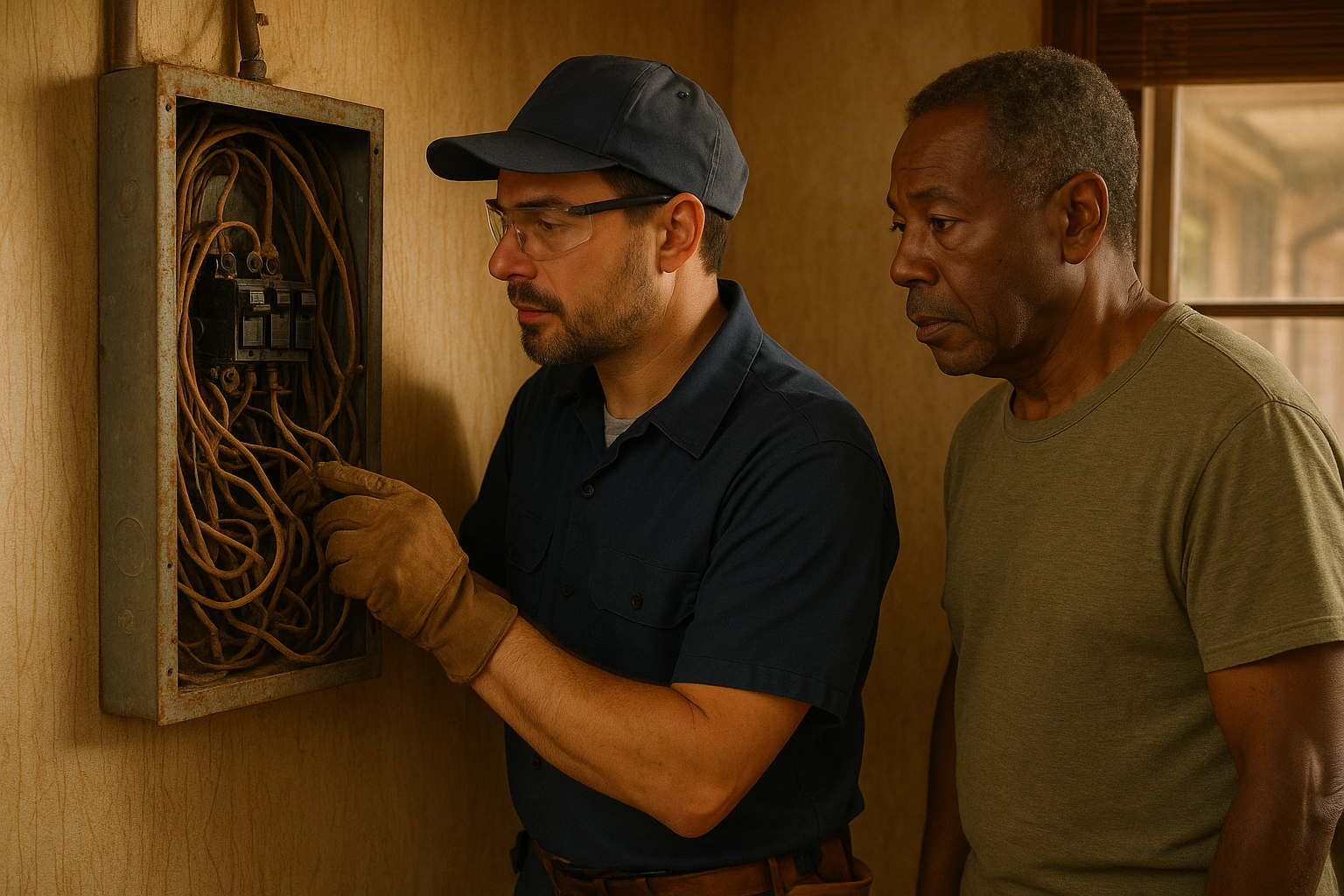
Can old wiring cause serious safety issues in your Southwest Florida home? Absolutely. In fact, homes built before 1980 throughout Port Charlotte, North Port, and Punta Gorda often contain outdated wiring systems that pose significant risks to families and property. After more than 20 years serving Southwest Florida homeowners, our family-owned team at Caliber Electric has seen firsthand how aging electrical systems create dangerous conditions that many residents don’t recognize until it’s too late.
Quick Answer: Old wiring can cause electrical fires, shock hazards, power failures, and equipment damage. Homes built before 1980 often contain outdated systems like knob-and-tube or aluminum wiring that deteriorate over time. These aging systems struggle to handle modern electrical demands, creating dangerous overheating conditions. Professional inspection and rewiring typically cost $1,500 to $10,000 depending on home size and wiring condition.
Understanding How Outdated Electrical Systems Create Danger
Old wiring doesn’t simply stop working overnight. Instead, it gradually deteriorates, creating increasingly hazardous conditions throughout your home. The question isn’t whether can old wiring cause problems, but rather when those problems will manifest and how severe they’ll become.
Electrical systems installed 30, 40, or 50 years ago were designed for completely different household demands. In the 1970s, the average home used approximately 3,000 watts of electricity. Today, that number exceeds 12,000 watts in many households throughout Venice, Englewood, and Sarasota. Air conditioning systems, multiple refrigerators, home offices, electric vehicle chargers, and countless electronic devices place enormous strain on wiring that was never engineered to handle such loads.
Furthermore, wiring materials themselves break down over time. Insulation becomes brittle and cracks away from conductors. Connections loosen as metal expands and contracts through decades of temperature cycles. Moisture infiltration corrodes copper and aluminum, increasing electrical resistance and creating heat buildup. These natural aging processes transform once-safe electrical systems into potential ignition sources lurking behind your walls.
The National Fire Protection Association reports that electrical failures or malfunctions cause an estimated 13% of all home fires annually. Moreover, homes with wiring more than 40 years old face significantly elevated risk compared to those with modern electrical systems.
6 Dangerous Problems Old Wiring Can Cause
1. Electrical Fires From Overheated Circuits
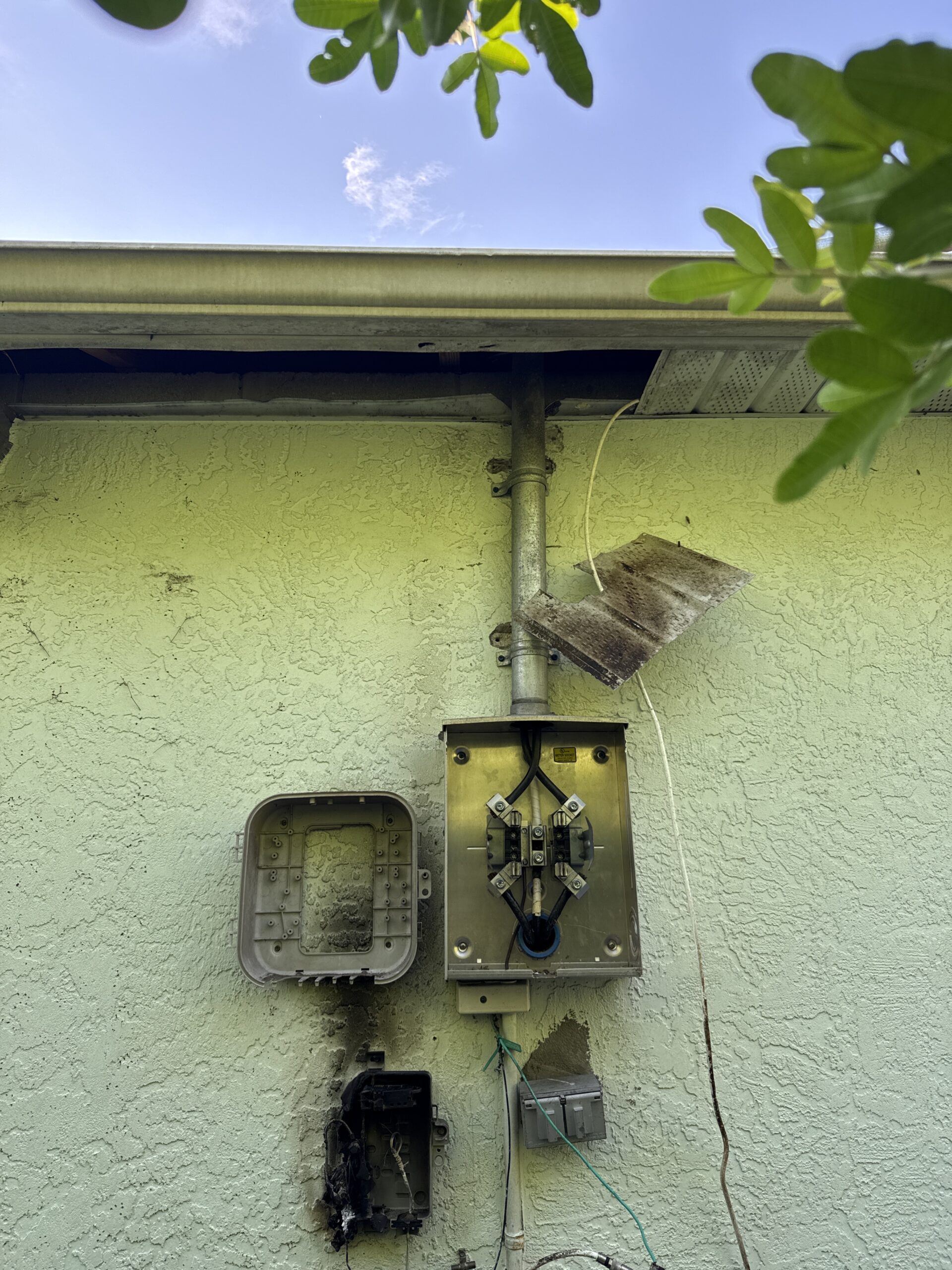
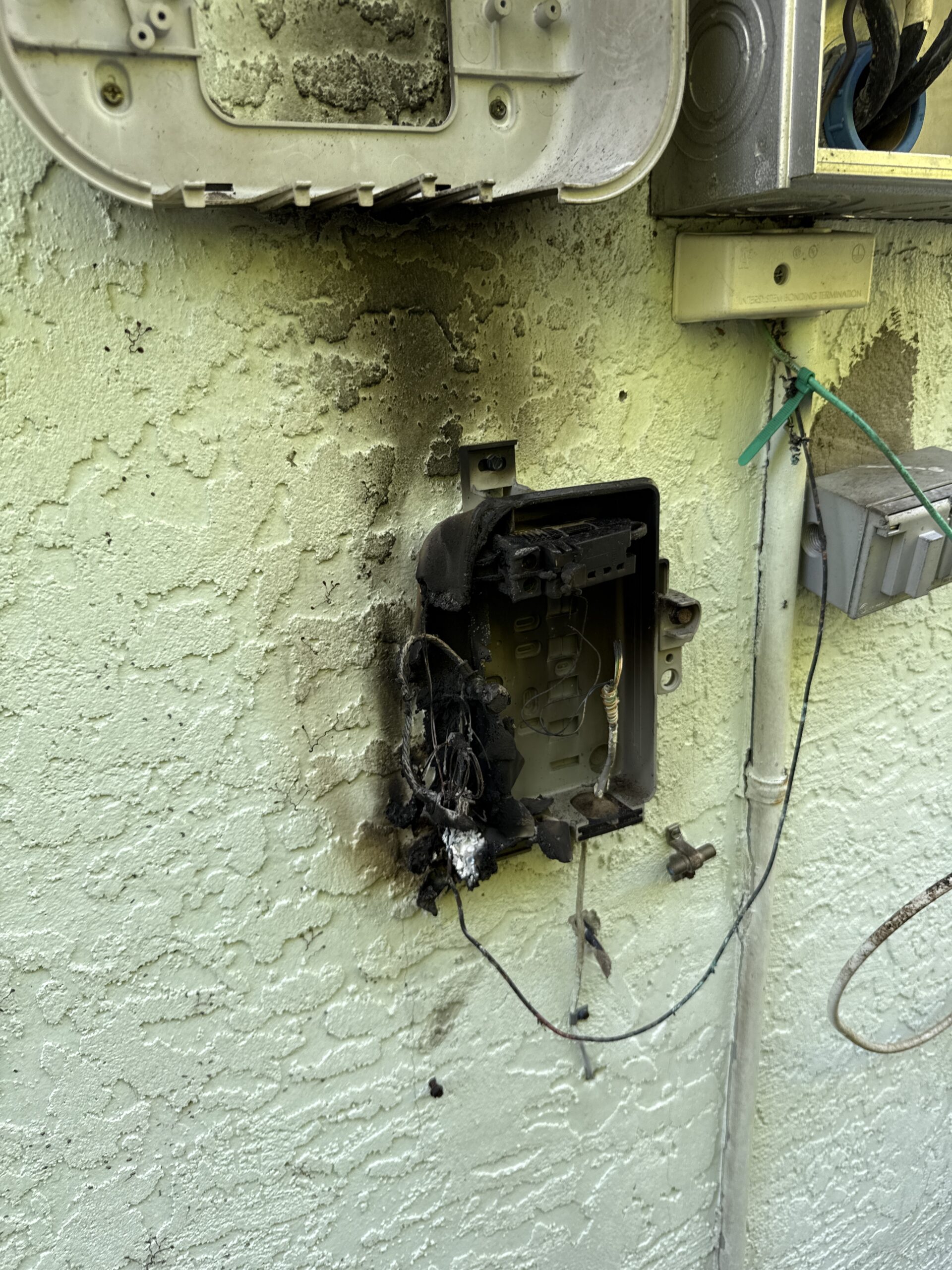
The most serious hazard involves fire risk. Can old wiring cause fires? Unfortunately, yes. Deteriorated insulation exposes bare conductors that can arc or create sparks when they contact metal junction boxes, framing members, or even each other. Additionally, undersized wiring that carries more current than originally intended generates excessive heat that can ignite surrounding building materials.
We’ve responded to numerous emergency calls throughout North Port where homeowners smelled burning plastic or noticed discoloration around outlets. In nearly every case, inspection revealed severely overheated wiring hidden behind walls. These situations represent fires that were caught early, but countless others result in devastating property damage and tragic loss of life.
Older homes often lack modern circuit breaker protection. Outdated fuse panels may allow dangerous overcurrent conditions to persist because homeowners install oversized fuses to stop “nuisance” tripping. This defeats the entire purpose of overcurrent protection and essentially removes the last line of defense against electrical fires.
2. Electric Shock Hazards and Electrocution Risk
Aging wiring systems frequently lack proper grounding, creating serious shock hazards throughout your home. Three-prong outlets installed in older homes sometimes aren’t actually grounded, giving residents a false sense of safety when plugging in appliances and electronics.
Deteriorated insulation allows energized conductors to make contact with metal enclosures, switch plates, and appliance housings. When you touch these surfaces, you can complete an electrical path to ground, resulting in potentially fatal shock. This scenario becomes especially dangerous in bathrooms, kitchens, and outdoor areas where moisture increases conductivity.
Furthermore, older wiring may not include ground fault circuit interrupter (GFCI) protection that modern electrical codes require in wet locations. These life-saving devices detect current imbalances and shut off power in milliseconds, preventing electrocution. Homes throughout Punta Gorda and surrounding communities built before 1980 typically need extensive GFCI retrofitting to meet current safety standards.
3. Power Failures and Frequent Circuit Breaker Trips
Can old wiring cause your breakers to trip constantly? Indeed, this represents one of the most common complaints we hear from homeowners. Circuits that repeatedly trip or fuses that blow regularly indicate your electrical system can’t handle current demands.
While nuisance tripping frustrates homeowners, it actually demonstrates that protective devices are doing their job by preventing dangerous overheating. However, the underlying problem remains: your home’s electrical capacity doesn’t match your lifestyle needs. This situation only worsens as you add more devices, appliances, and modern conveniences.
Loose connections in aging wiring also create intermittent power issues. You might notice lights flickering when appliances cycle on, or outlets that work sporadically. These symptoms indicate poor electrical connections that generate heat and pose fire risks. In our experience serving Port Charlotte families, these intermittent problems inevitably worsen until complete failure or fire occurs.
4. Damage to Electronics and Appliances
Modern electronics contain sensitive components that require stable, clean electrical power. Old wiring systems with poor grounding, loose connections, and inadequate capacity create voltage fluctuations that can damage or destroy expensive equipment.
We’ve inspected homes in Venice where residents repeatedly replaced televisions, computers, and smart home devices, never realizing their outdated electrical system was the root cause. Computer power supplies fail prematurely, LED bulbs burn out quickly, and sensitive electronics exhibit strange behavior or random shutdowns.
Additionally, inadequate grounding allows voltage spikes and surges to reach connected equipment. While whole-home surge protection can help, it’s far less effective when the underlying electrical system lacks proper grounding. Protecting your electronics requires both quality surge protection and a sound electrical foundation.
5. Insurance Coverage Complications
Many homeowners don’t realize their insurance policies may exclude coverage for damage caused by outdated electrical systems. Insurance companies increasingly require electrical inspections for homes over 40 years old, and they may refuse coverage, charge higher premiums, or exclude electrical-related claims if you have knob-and-tube wiring, aluminum wiring, or inadequate service capacity.
This financial risk compounds the physical dangers. Not only does old wiring threaten your family’s safety, it can also leave you financially exposed if fire or electrical damage occurs. Several homeowners throughout Englewood have discovered this harsh reality only after filing claims that insurance companies denied due to known electrical deficiencies.
6. Inability to Power Modern Home Systems
Beyond safety concerns, outdated wiring simply can’t support today’s electrical demands. Homeowners who want to install electric vehicle chargers, backup generators, or high-efficiency heat pumps often discover their existing electrical service and wiring can’t accommodate these additions.
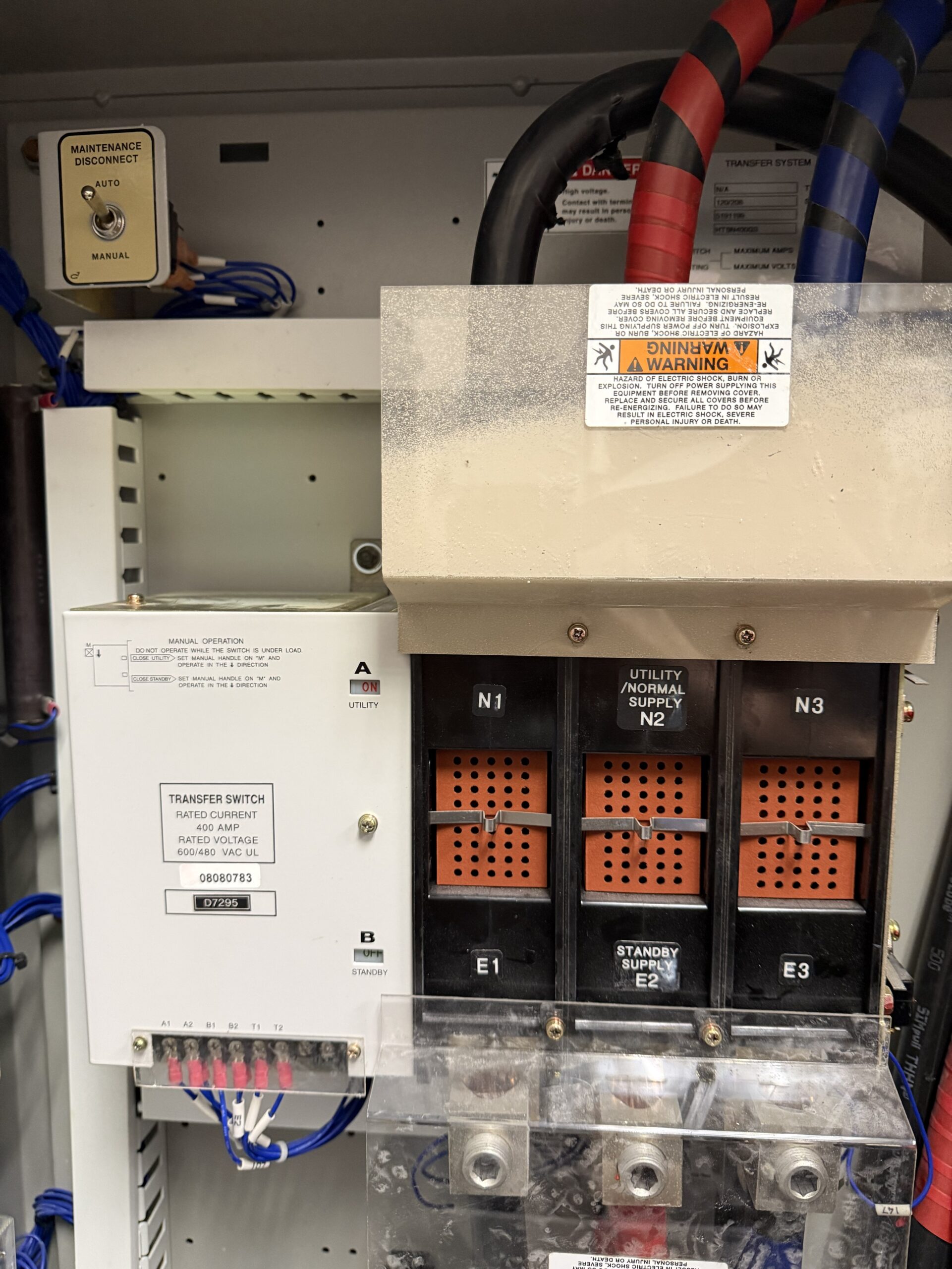
We regularly perform panel upgrades and rewiring projects in Sarasota for residents who need to modernize their homes. Installing a Level 2 EV charger typically requires a 240-volt, 40 to 60-amp circuit. Many older homes lack both the panel capacity and the wire gauge needed to safely supply this load. Similarly, whole-home generators require proper transfer switches and adequate electrical capacity that aging systems simply don’t provide.
For a comprehensive overview of related safety concerns, see our detailed guide on can old wiring cause problems and warning signs to watch for.
What Types of Old Wiring Create the Greatest Risks?
Not all old wiring presents equal danger. Certain materials and installation methods create substantially higher risks than others. Understanding what’s hiding behind your walls helps you assess your home’s safety level.
Knob-and-tube wiring was standard in homes built before 1950. This system uses porcelain insulators to route individual conductors through wall cavities. While it functioned adequately when new, knob-and-tube wiring lacks grounding, uses deteriorated insulation, and cannot safely power modern loads. Insurance companies frequently refuse to cover homes with active knob-and-tube systems. If your Port Charlotte home dates to the 1940s or earlier, there’s a significant chance this outdated wiring still exists in attics or wall cavities.
Aluminum branch circuit wiring appeared in homes built between 1965 and 1973 when copper prices spiked. Unfortunately, aluminum wiring creates multiple safety issues. Aluminum oxidizes more readily than copper, increasing electrical resistance at connections. It also expands and contracts more dramatically with temperature changes, loosening terminal connections over time. These factors combine to create dangerous hot spots at outlets, switches, and junction boxes. The Consumer Product Safety Commission estimates that homes with aluminum wiring are 55 times more likely to reach “fire hazard conditions” than homes with copper wiring.
Cloth-insulated wiring appeared in homes from the 1920s through the 1970s. The fabric insulation surrounding these conductors becomes brittle with age and literally falls apart when disturbed. This leaves bare conductors exposed inside junction boxes and wall cavities, creating significant shock and arc-flash hazards. We encounter deteriorated cloth wiring weekly throughout North Port during remodeling projects and panel upgrades.
Undersized service panels represent another critical issue. Many older homes in Punta Gorda and Venice have only 60 or 100-amp electrical services. Today’s homes typically require 200-amp service to safely power air conditioning, water heating, kitchen appliances, home offices, and EV charging. Operating near or beyond your panel’s rated capacity creates chronic overheating and fire risk.
How Much Does Electrical Rewiring Cost in Southwest Florida?
Homeowners naturally want to know the financial investment required to address dangerous wiring conditions. However, rewiring costs vary dramatically based on home size, accessibility, and the extent of work needed.
Partial rewiring to address specific problem areas typically costs $1,500 to $4,000. This might include replacing aluminum wiring with copper in critical circuits, adding GFCI protection throughout wet areas, or rewiring a kitchen to support modern appliances. Many Port Charlotte homeowners start with targeted improvements to address the most pressing safety concerns.
Whole-home rewiring for an average 1,500 to 2,000 square foot home generally runs $6,000 to $15,000. This comprehensive approach removes all outdated wiring and installs a completely modern electrical system with proper grounding, adequate capacity, and code-compliant protection. Factors affecting cost include whether drywall access is available, ceiling height, slab or crawlspace foundation, and local permit requirements.
Panel upgrades from 100 to 200 amps cost approximately $2,000 to $4,000 including materials, labor, and permit fees. This improvement provides the capacity foundation needed for modern electrical demands. Many Englewood and Sarasota homeowners combine panel upgrades with targeted circuit additions to support specific needs like EV charging or backup generators.
While these investments seem substantial, consider them against potential losses. The average home fire causes over $75,000 in property damage. More importantly, no price tag can be placed on family safety. Furthermore, modern electrical systems add genuine value to your property. Home buyers increasingly demand updated electrical systems, and appraisers recognize this value during property assessments.
Our family-owned company provides transparent, detailed quotes that explain exactly what work your home needs and why. After 20 years serving Southwest Florida, we understand the financial considerations families face, and we help prioritize improvements that deliver the greatest safety benefit within your budget.
When Should You Have Your Home’s Electrical System Inspected?
Can old wiring cause problems even if everything seems to work fine? Absolutely. Many hazardous conditions remain completely invisible until inspection or disaster strikes. Therefore, proactive electrical inspections make sense for any older home.
We recommend professional electrical inspections if your home was built before 1990, especially if you’ve experienced any warning signs like flickering lights, burning smells, discolored outlets, or frequent breaker trips. Additionally, schedule an inspection before purchasing any older home throughout North Port, Punta Gorda, or surrounding communities. The few hundred dollars invested in pre-purchase inspection can reveal thousands of dollars in needed repairs and potentially save your life.
Homeowners planning renovations should always have electrical systems inspected first. Opening walls provides ideal access for rewiring work, making it far more cost-effective to address electrical issues during planned remodeling rather than as separate projects later. Moreover, if you’re adding significant electrical loads like electric vehicle chargers, pools, hot tubs, or home additions, professional assessment ensures your existing system can safely handle the increased demand.
Insurance company requirements also drive inspection timing. If your insurer requests electrical certification, respond promptly with a licensed contractor inspection. Similarly, if you’re changing insurance carriers, proactively obtaining electrical documentation may help secure better rates and coverage terms.
Frequently Asked Questions About Old Wiring Hazards
Can old wiring cause problems even if the home passed inspection?
Yes, standard home inspections provide only surface-level electrical assessment. Inspectors cannot open walls or test every circuit comprehensively. Therefore, homes that “passed” inspection may still contain dangerous wiring conditions. Licensed electricians perform more thorough evaluations that identify hidden hazards.
How can I tell if my home has dangerous old wiring?
Warning signs include frequent breaker trips, flickering lights, outlets or switches that feel warm, burning odors, discolored outlet covers, and insufficient outlets requiring extensive extension cord use. Additionally, if your home was built before 1980 and hasn’t been rewired, professional inspection is strongly recommended regardless of visible symptoms.
Does homeowners insurance cover rewiring costs?
Typically no. Insurance policies cover sudden, accidental damage but exclude normal maintenance and upgrades. However, addressing electrical hazards may help you secure coverage or avoid policy cancellation. Some insurance companies offer discounts for homes with updated electrical systems.
Can I just replace the outlets and fixtures instead of rewiring?
Unfortunately, cosmetic updates don’t address underlying safety issues. New outlets connected to deteriorated wiring behind walls still pose fire and shock risks. Furthermore, installing three-prong outlets without proper grounding creates false security. Comprehensive rewiring represents the only reliable solution for homes with dangerous outdated systems.
How long does whole-home rewiring take?
Most complete rewiring projects require three to seven days depending on home size and complexity. Our licensed electricians work efficiently to minimize disruption while ensuring all work meets or exceeds current electrical codes. We coordinate carefully with homeowners to maintain livable conditions throughout the project.
Is aluminum wiring dangerous enough to require immediate replacement?
Aluminum branch circuit wiring does present elevated fire risk compared to copper. However, several remediation options exist beyond complete replacement. Licensed electricians can install special connectors at termination points, apply anti-oxidant compound, and verify proper torque specifications. We evaluate each situation individually and recommend the most appropriate solution.
What’s the difference between electrical code compliance and actual safety?
Electrical codes establish minimum safety standards. Homes may technically meet the code that existed when they were built while still presenting hazards by today’s standards. Modern codes incorporate decades of safety research and real-world experience. Therefore, bringing older homes up to current code standards significantly improves safety even though the original installation was “legal” at the time.
Why Choose Caliber Electric for Your Electrical Safety Needs
Your family’s safety deserves the attention of experienced, licensed professionals who genuinely care about the Southwest Florida community. For over 20 years, our family-owned company has served homeowners throughout Port Charlotte, North Port, Punta Gorda, Venice, Englewood, and Sarasota with honest assessments, quality workmanship, and transparent pricing.
We understand the concerns you face when discovering your home may contain dangerous wiring. Our licensed electricians take time to thoroughly explain what we find, why it matters, and what options you have to address safety issues. We never use scare tactics or pressure sales approaches. Instead, we provide the information you need to make confident decisions about protecting your home and family.
Moreover, our comprehensive services extend beyond rewiring. We perform panel upgrades to support modern electrical demands, install whole-home surge protection, add dedicated circuits for EV chargers and generators, upgrade outlets with GFCI and AFCI protection, and handle emergency electrical issues 24/7. Whatever electrical challenges your older home presents, our experienced team has the knowledge and equipment to solve them safely and efficiently.
Don’t wait for warning signs to become disasters. Contact Caliber Electric today for a comprehensive electrical safety inspection. We’ll assess your home’s specific situation, identify any hazards, and provide a detailed plan to bring your electrical system up to modern safety standards. Your family’s safety is too important to leave to chance.