

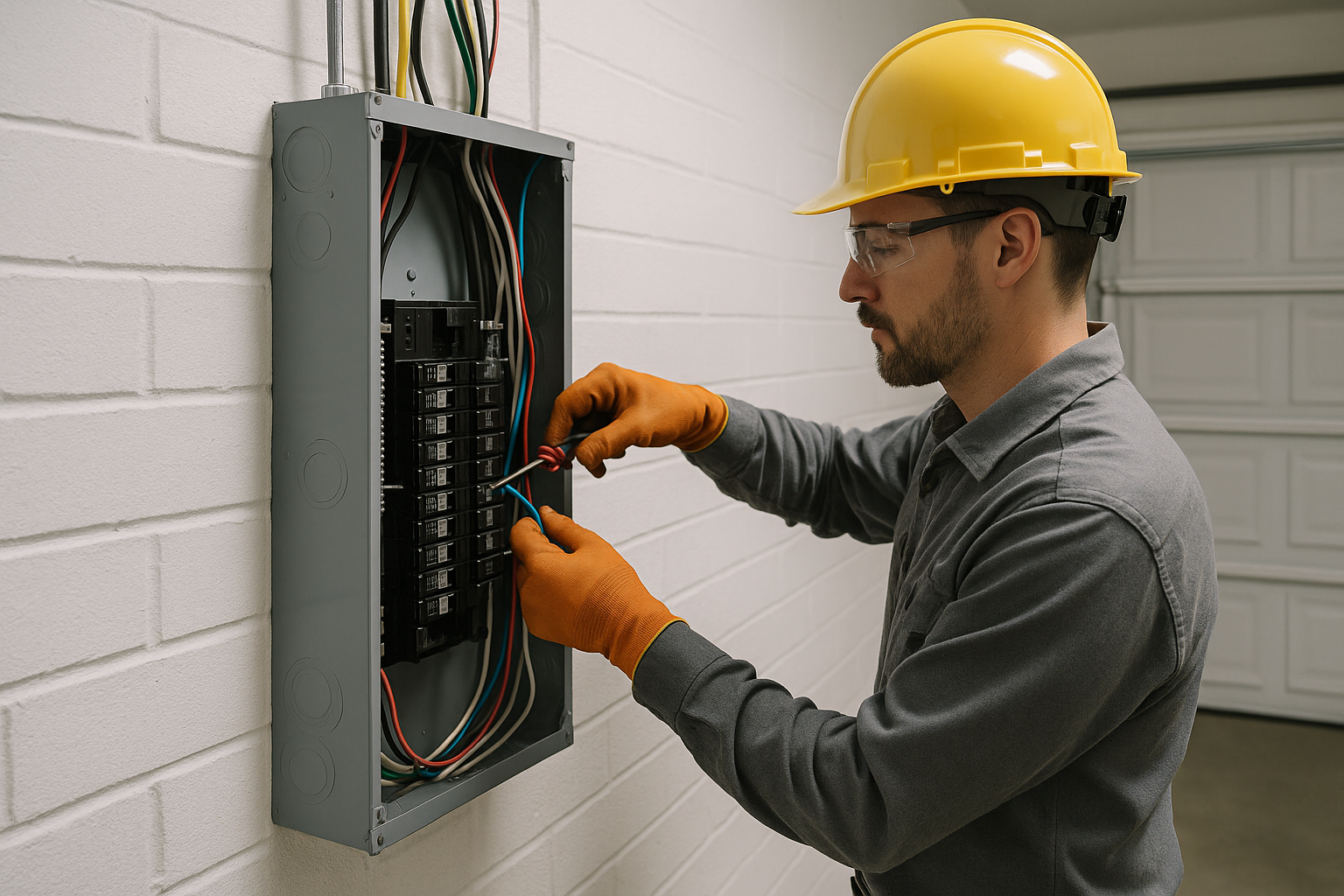
Breaker panel replacement is one of the most critical electrical upgrades Southwest Florida homeowners will ever need, yet many don’t realize their panel is outdated until they experience repeated tripping, flickering lights, or failed inspections. Your electrical panel serves as the heart of your home’s electrical system, distributing power safely to every outlet, appliance, and light fixture. Over the past 20 years serving Port Charlotte, North Port, Punta Gorda, Venice, Englewood, and Sarasota, we’ve helped thousands of families upgrade their panels to meet modern electrical demands and safety standards.
Quick Answer: Breaker panel replacement involves removing an outdated or undersized electrical panel and installing a new one that meets current electrical codes and your home’s power needs. Most residential upgrades take 4-8 hours and cost between $1,800 and $4,500 depending on amperage, location, and code requirements. Homes built before 1990, those with Federal Pacific or Zinsco panels, or properties adding major appliances like EV chargers typically need replacement.
What Is Breaker Panel Replacement and Why Does It Matter?
Breaker panel replacement is the process of removing your existing electrical service panel and installing a new one that safely handles your home’s electrical load. The breaker panel, also called the main service panel or load center, contains circuit breakers that protect your home’s electrical circuits from overloads and short circuits.
In Southwest Florida’s climate, where air conditioning runs constantly and saltwater air accelerates corrosion, electrical panels face unique challenges. Moreover, most homes built before 2000 were designed for significantly lower electrical loads than today’s demands. When you add electric vehicle chargers, modern HVAC systems, pool equipment, and smart home devices, that 100-amp panel from 1985 simply can’t keep up.
The National Fire Protection Association estimates that electrical failures contribute to approximately 13% of home fires, with outdated panels being a major contributing factor. Therefore, upgrading your panel isn’t just about convenience. It’s fundamentally about protecting your family and property.
Our family-owned company has seen firsthand how panel replacements transform homes in Venice and Englewood, eliminating constant breaker trips and providing the capacity needed for modern living. In fact, many homeowners report immediate improvements in appliance performance and overall electrical reliability after upgrading.
7 Warning Signs You Need Breaker Panel Replacement
Recognizing the signs that your panel needs replacement can prevent dangerous situations and costly damage. Furthermore, addressing these issues early typically costs less than waiting for a catastrophic failure.
1. Your Home Was Built Before 1990
Homes constructed before 1990 typically have 100-amp or smaller panels, which were adequate for their time but insufficient for today’s electrical demands. Consequently, these panels struggle to power modern homes with multiple computers, large-screen televisions, high-efficiency HVAC systems, and kitchen appliances.
Additionally, building codes have evolved significantly over the past three decades. Older panels may lack proper grounding, have outdated breaker technology, or use wiring methods no longer considered safe. We regularly service homes in North Port and Punta Gorda where original panels from the 1970s and 1980s desperately need replacement.
2. You Have a Federal Pacific or Zinsco Panel
Federal Pacific Electric (FPE) and Zinsco panels represent serious safety hazards. Indeed, studies have shown that FPE breakers fail to trip when they should in up to 60% of cases, potentially allowing dangerous overloads and fires.
These panels were installed in millions of homes between the 1950s and 1980s, including throughout Southwest Florida. If you have either brand, replacement should be your top priority, regardless of whether you’re experiencing obvious problems. Our licensed electricians can identify these panels during a free inspection and provide immediate recommendations.
3. Breakers Trip Frequently
Occasional breaker trips are normal when you overload a circuit. However, if you experience frequent tripping, especially on multiple circuits, your panel is likely undersized for your electrical needs. This constant cycling also damages the breakers themselves, reducing their effectiveness over time.
Homeowners in Port Charlotte often call us after repeatedly resetting breakers for their air conditioning, pool pumps, or kitchen appliances. In most cases, these homes need breaker panel replacement to provide adequate capacity. Circuit breaker problems sometimes indicate individual breaker failure, but repeated issues across multiple circuits point to panel inadequacy.
4. You’re Planning to Add an EV Charger or Major Appliance
Electric vehicle chargers typically require 40 to 60 amps of dedicated power. Similarly, whole-home generators, large pool heaters, and high-efficiency heat pumps demand substantial electrical capacity. If your current panel is already near capacity, adding these loads requires an upgrade.
We help Sarasota and Venice homeowners plan electrical upgrades before purchasing EVs or installing solar panels. Therefore, assessing your panel’s capacity early in the planning process prevents costly surprises and ensures your electrical system can safely support new technology.
5. You See Rust, Corrosion, or Signs of Moisture
Moisture inside your electrical panel creates dangerous conditions. Consequently, any signs of rust, corrosion, water stains, or condensation require immediate professional attention. Southwest Florida’s humidity and occasional flooding make this particularly relevant for coastal communities.
Corroded connections create resistance, which generates heat and increases fire risk. Moreover, moisture compromises the insulation on wires and can cause breakers to fail. Our technicians regularly encounter corroded panels in Englewood homes, especially those near the water or with poor ventilation around the panel location.
6. The Panel Feels Warm or Emits Burning Smells
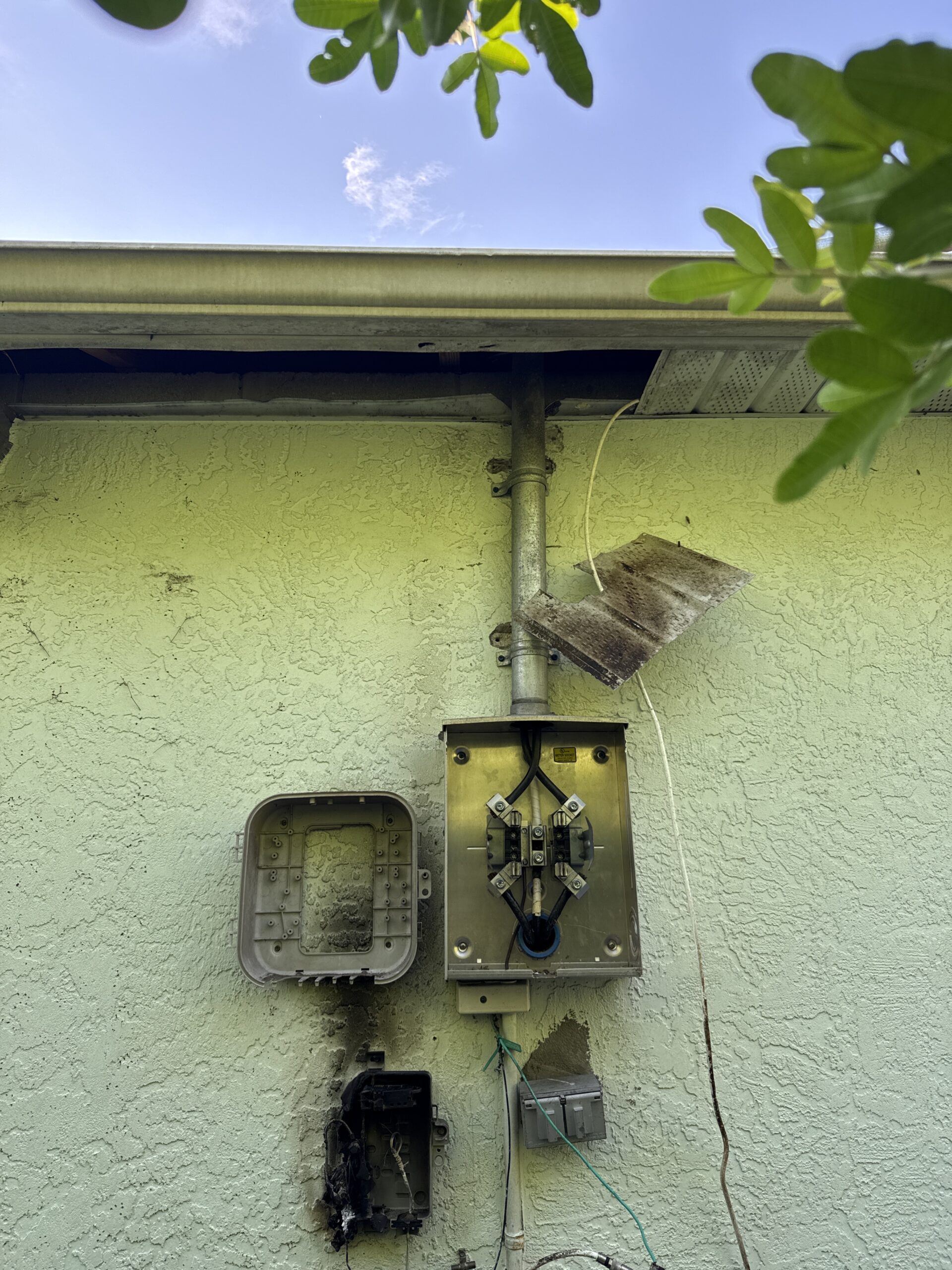
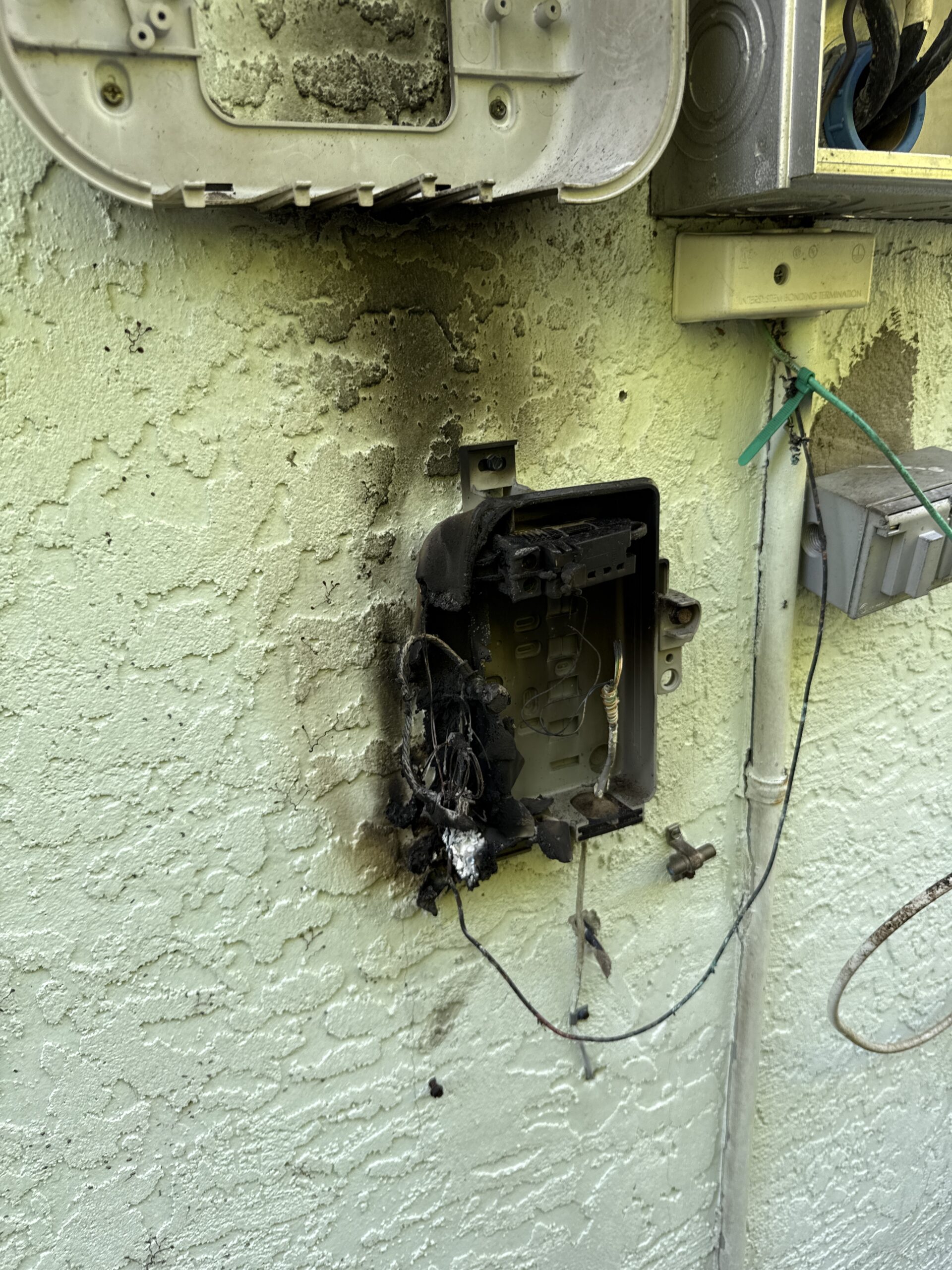
A properly functioning panel should never feel warm to the touch or emit any odors. In fact, if you notice either condition, turn off power at the main breaker if safe to do so and call an emergency electrician immediately. These symptoms indicate dangerous overheating, failed connections, or deteriorating components.
Overheating occurs when connections loosen over time, when breakers exceed their rated capacity, or when aluminum wiring oxidizes. Furthermore, burning smells often indicate melting insulation or arcing, both of which can quickly escalate to electrical fires.
7. Your Panel Has Less Than 100 Amps Service
If your home still has a 60-amp or even 100-amp service, upgrading to at least 200 amps provides the capacity modern homes require. Most new construction and comprehensive renovations now install 200-amp or larger panels as standard.
Undersized service limits what you can safely operate simultaneously. For example, you might find that running your dryer, oven, and air conditioning together trips the main breaker. Additionally, undersized panels make it impossible to add capacity for future needs without a complete replacement.
How Does the Breaker Panel Replacement Process Work?
Understanding what happens during breaker panel replacement helps homeowners prepare and sets realistic expectations. The process involves careful planning, coordination with your utility company, and skilled electrical work.
First, our licensed electricians conduct a thorough assessment of your current electrical system, including the panel, main service entrance, grounding system, and electrical load requirements. We then design a replacement plan that meets current electrical codes and accommodates your home’s present and future needs. In Southwest Florida, this includes ensuring proper protection against power surges common during summer storms.
Next, we coordinate with your local utility company to schedule a temporary power disconnect. This typically happens on the day of installation and usually lasts 4-8 hours depending on the complexity of your upgrade. Meanwhile, we prepare all materials, obtain necessary permits from local building departments in Port Charlotte, Venice, or whichever community you call home, and schedule inspections.
During installation, our team safely removes the old panel, updates the service entrance if needed, installs the new panel with proper grounding and bonding, connects all circuits to appropriately sized breakers, labels everything clearly, and tests the entire system for safety and functionality. Subsequently, the utility company reconnects power, and a licensed inspector verifies that all work meets current electrical codes.
Finally, we walk you through your new panel, explaining how each circuit works, how to reset breakers if needed, and how the increased capacity benefits your home. This educational component ensures you understand your investment and can operate your electrical system confidently.
What Are the Different Types of Electrical Panels?
Choosing the right panel type matters for functionality, safety, and future flexibility. However, not all panels suit every situation, so understanding your options helps you make informed decisions.
Main breaker panels represent the most common residential type and include a main breaker that controls power to the entire panel plus individual circuit breakers for each circuit. These panels work well for most homes and provide straightforward operation and maintenance. We install these in the majority of residential upgrades throughout North Port and Punta Gorda.
Main lug panels lack a main breaker and instead connect directly to the main service disconnect located elsewhere. These panels typically serve as subpanels in detached garages, workshops, or pool equipment areas. They cost less than main breaker panels but require a main disconnect upstream.
Subpanels distribute power from the main panel to specific areas of your home, effectively extending your electrical system’s reach. For instance, large homes, properties with detached structures, or homes with distant room additions often benefit from subpanels. These reduce voltage drop over long wire runs and organize circuits more efficiently.
Smart electrical panels represent the newest technology, offering circuit-level monitoring, remote control via smartphone apps, automatic load management, and integration with solar panels and battery storage systems. While more expensive initially, these panels provide unprecedented control over your home’s energy use and position you perfectly for future technology adoption. We’re installing more smart panels each year as Sarasota and Venice homeowners embrace home automation and renewable energy.
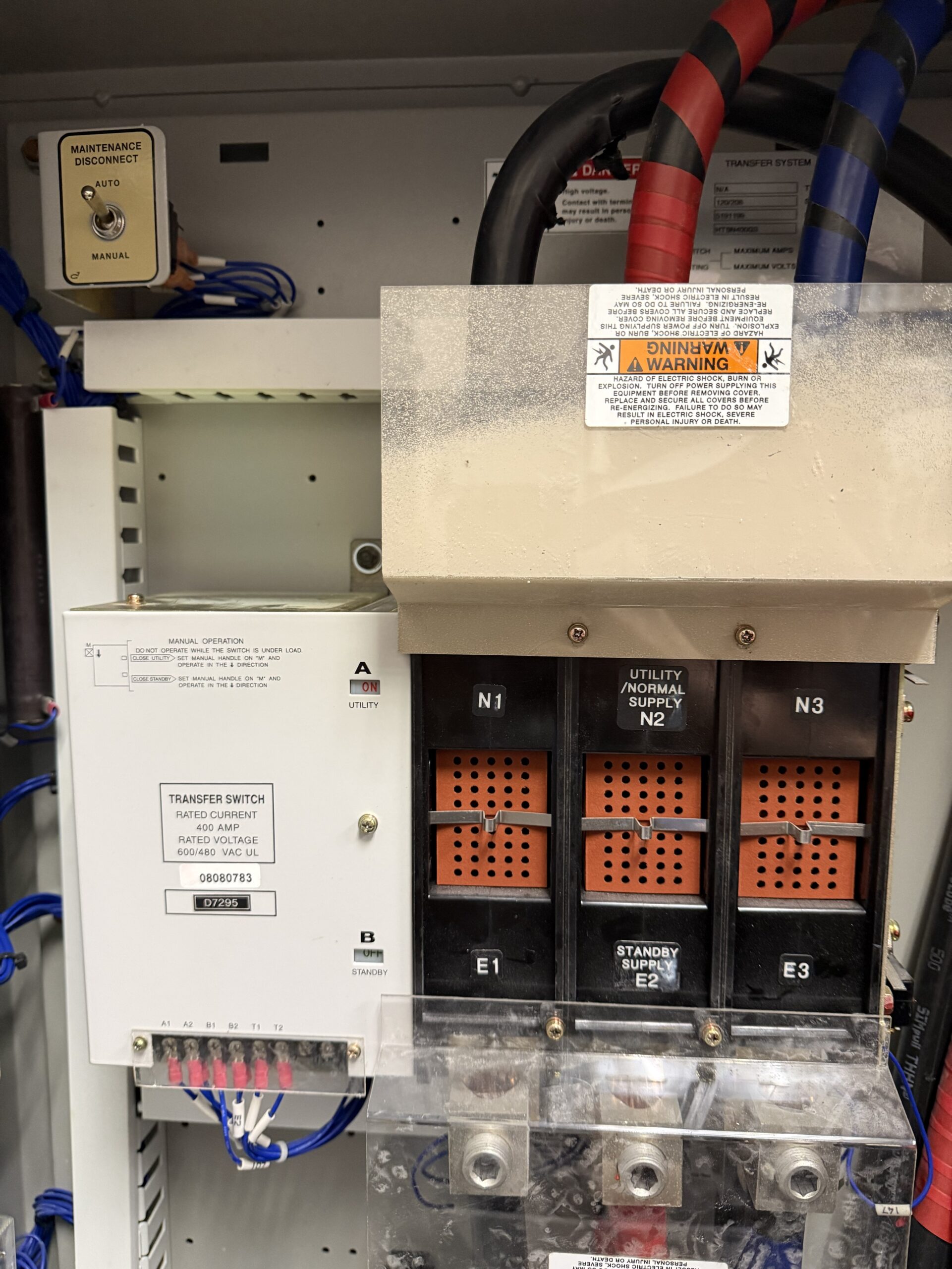
Transfer switch panels specifically support backup generators, allowing you to safely switch between utility and generator power during outages. Given Southwest Florida’s hurricane season, many homeowners combine breaker panel replacement with generator installation for comprehensive power security.
How Much Does Breaker Panel Replacement Cost in Southwest Florida?
Understanding cost factors helps you budget appropriately and avoid surprises. Several variables influence the final price for breaker panel replacement projects.
Basic 100-amp to 200-amp panel replacement typically costs between $1,800 and $3,200 for straightforward installations where the service entrance, meter location, and grounding system require minimal updates. This includes the panel itself, installation labor, permits, and inspections. However, every home presents unique circumstances that can affect pricing.
Service upgrade projects that increase amperage capacity, such as upgrading from 100-amp to 200-amp service, often require utility company involvement, new meter bases, upgraded service entrance cables, and sometimes new grounding systems. These comprehensive upgrades typically range from $3,000 to $4,500 depending on the scope of work.
Panel location relocation adds costs when your existing panel sits in an unsafe or inaccessible location. Moving a panel requires running new service entrance cables, potentially updating the meter location, extending or rerouting branch circuits, and additional drywall and finishing work. Therefore, these projects can add $800 to $2,000 to the base replacement cost.
Smart panel installations cost more upfront, typically $3,500 to $6,000 depending on features and capacity. Nevertheless, the energy monitoring and management capabilities often pay for themselves over time through reduced electricity consumption and better integration with solar panels or battery storage systems.
Additional factors affecting cost include permit fees that vary by municipality across Port Charlotte, Punta Gorda, Venice, and Sarasota, upgrades to grounding systems required to meet current codes, modifications to accommodate panel accessibility requirements, and correction of existing code violations discovered during the project. Our family-owned company provides detailed written estimates that break down all costs, so you know exactly what you’re paying for and why.
Moreover, investing in quality panel replacement now prevents far more expensive problems later. Fire damage, repeated service calls for electrical issues, and inability to add desired appliances or technology all cost significantly more than proactive panel upgrades.
Frequently Asked Questions About Breaker Panel Replacement
How long does breaker panel replacement take?
Most residential breaker panel replacement projects take between 4 and 8 hours to complete. However, complex upgrades involving service entrance modifications, panel relocation, or extensive circuit rewiring may require a full day or occasionally extend into a second day for final inspections and testing.
Can I replace my own breaker panel?
No, breaker panel replacement requires a licensed electrician and proper permits in all Southwest Florida municipalities. In fact, working on your main electrical panel without proper licensing is illegal, extremely dangerous, and will void your homeowners insurance if something goes wrong. Additionally, utility companies will only work with licensed contractors.
Will my power be off during the entire replacement?
Your power will be disconnected for most of the installation process, typically 4-8 hours. Therefore, plan accordingly by charging devices beforehand, avoiding the need for refrigerator access during this period, and scheduling the work during mild weather when possible to minimize discomfort without air conditioning.
Do I need a permit for breaker panel replacement?
Yes, all breaker panel replacement projects require electrical permits in Port Charlotte, North Port, Punta Gorda, Venice, Englewood, and Sarasota. Permits ensure work meets safety codes and includes required inspections. Furthermore, permitted work protects your home’s resale value and insurance coverage.
How often should electrical panels be replaced?
Electrical panels typically last 25-40 years under normal conditions. However, panels should be evaluated for replacement if they show any warning signs, regardless of age. Additionally, homes with outdated panel brands or those needing increased capacity may benefit from earlier replacement.
What size panel do I need for my home?
Most modern homes require at least 200-amp service to handle current electrical demands. However, larger homes, properties with extensive outdoor features, or homes with electric heating, EV chargers, or plans for solar panels may benefit from 300-amp or 400-amp service. Our electricians calculate your specific needs during the assessment.
Will upgrading my panel increase my home’s value?
Yes, a new electrical panel increases home value and marketability. Moreover, many home inspections flag outdated panels as deficiencies, potentially derailing sales or reducing offers. Therefore, proactive panel replacement eliminates this obstacle and demonstrates proper home maintenance to prospective buyers.
Trust Caliber Electric for Your Breaker Panel Replacement in Southwest Florida
For over 20 years, Caliber Electric has served families and businesses throughout Port Charlotte, North Port, Punta Gorda, Venice, Englewood, and Sarasota with honest, professional electrical services. As a family-owned company, we understand that your home’s safety and reliability matter more than anything else. That’s why we take the time to thoroughly assess your electrical system, explain your options clearly, and complete every breaker panel replacement project to the highest standards.
Our team of fully licensed, insured electricians stays current with all electrical codes and manufacturer certifications, ensuring your panel replacement meets every safety requirement and performs flawlessly for decades to come. Furthermore, we stand behind our work with comprehensive warranties and remain available for any questions or service needs that arise after your installation.
Whether you’re experiencing warning signs with your current panel, planning to add an EV charger or generator, or simply want peace of mind that your electrical system is safe and adequate, Caliber Electric provides the expertise you need. Contact us today at (941) 484-4694 for a free assessment of your electrical panel and a detailed estimate for replacement. We’ll help you make the right decision for your home, your family, and your budget, backed by two decades of trusted service throughout Southwest Florida.