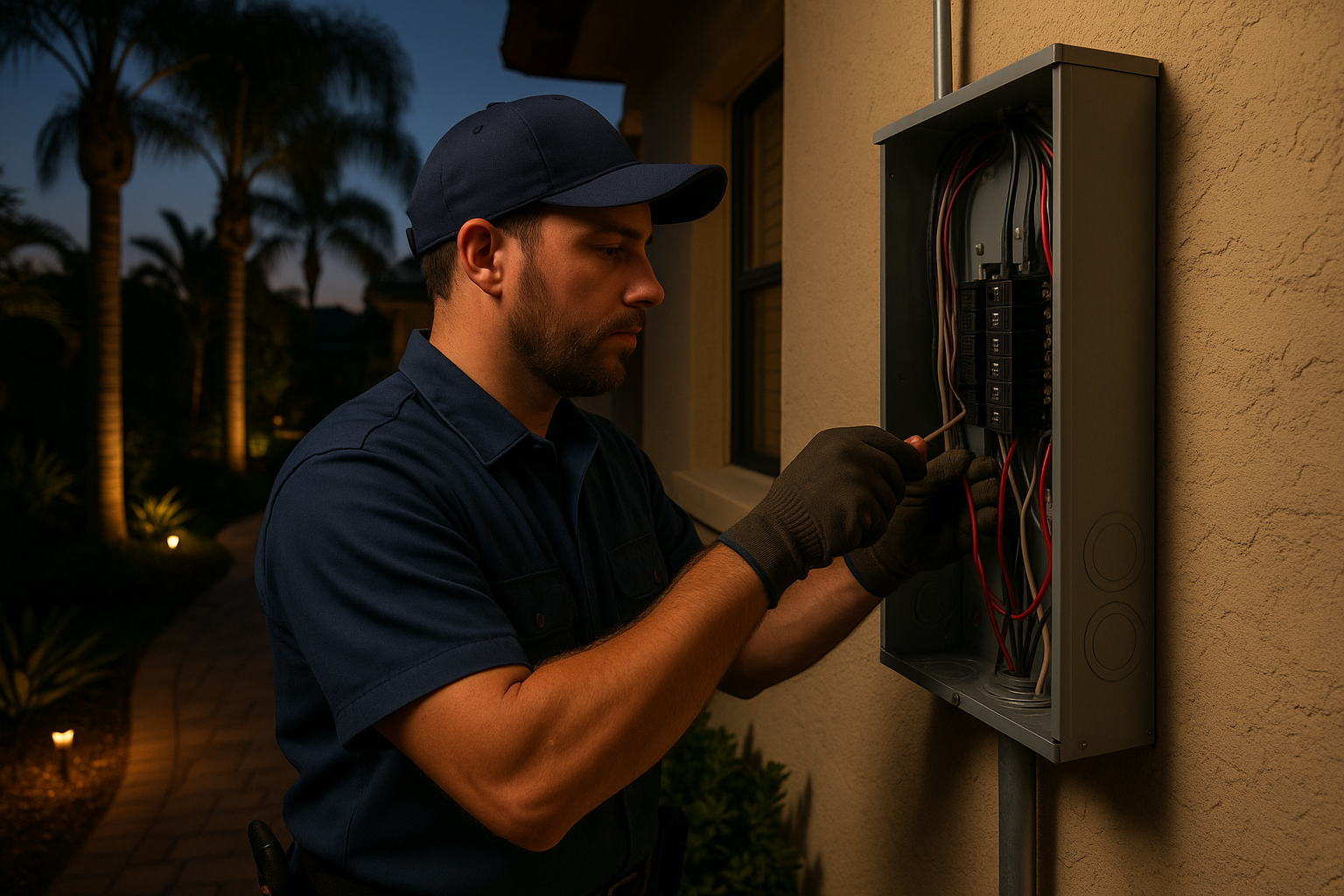



Finding the right commercial electrician for your business is one of the most critical decisions you’ll make as a property owner or facility manager. Whether you’re managing a retail store in Port Charlotte, operating a restaurant in Sarasota, or overseeing an office building in North Port, your electrical system is the backbone of your daily operations. A single electrical failure can halt productivity, endanger employees, and cost thousands in lost revenue.
Quick Answer: A commercial electrician is a licensed professional who specializes in electrical systems for businesses, retail spaces, offices, and industrial facilities. Unlike residential electricians, commercial electricians handle higher voltage systems, three-phase power, complex machinery wiring, and commercial code compliance. They perform installations, repairs, upgrades, and emergency services for business properties.
What Is a Commercial Electrician?
A commercial electrician specializes in electrical work for business and commercial properties, handling systems that are significantly more complex than residential installations. Commercial electrical systems typically involve higher voltage requirements, three-phase power distribution, and sophisticated equipment that demands specialized training and licensing.
Commercial electricians work on properties including retail stores, restaurants, office buildings, medical facilities, warehouses, and industrial complexes throughout Southwest Florida. Their work encompasses everything from initial electrical design and installation to ongoing maintenance, emergency repairs, and system upgrades.
The distinction between commercial and residential electrical work is substantial. Commercial projects require expertise in local business electrical codes, National Fire Protection Association (NFPA) standards, and coordination with general contractors, architects, and building inspectors. Therefore, choosing someone with specific commercial experience is essential for your business’s safety and compliance.
6 Signs You Need to Hire a Commercial Electrician
1. Frequent Circuit Breaker Trips
When your business experiences repeated circuit breaker trips, it signals a serious underlying problem. This issue typically indicates that your electrical system is overloaded, outdated, or experiencing equipment failure. For businesses in Venice or Englewood, older commercial buildings may have electrical panels designed for far less power consumption than modern businesses require.
Circuit breakers protect your property from electrical fires by shutting down when circuits become overloaded. However, constant tripping disrupts operations, damages sensitive equipment, and indicates your system cannot handle current demands. A qualified commercial electrician can assess your power distribution, identify problematic circuits, and recommend solutions such as panel upgrades or load balancing.
2. Flickering or Dimming Lights
Flickering lights in your commercial space are more than an annoyance; they’re a warning sign. This symptom often indicates loose wiring connections, voltage fluctuations, or inadequate power supply to your lighting systems. In retail environments throughout Punta Gorda and Port Charlotte, poor lighting directly impacts customer experience and sales.
Additionally, dimming lights when equipment starts up suggests your electrical system struggles to handle simultaneous loads. This problem commonly affects restaurants when kitchen equipment activates or offices when HVAC systems cycle on. Commercial electricians can diagnose whether you need circuit redistribution, voltage stabilization, or electrical service upgrades.
3. Outdated Electrical Panel
Many commercial buildings in Southwest Florida still operate with electrical panels installed 20, 30, or even 40 years ago. These outdated panels cannot safely accommodate modern business electrical demands, from computer networks to energy-intensive equipment. Furthermore, older panels may lack proper ground fault protection required by current commercial codes.
An electrical panel upgrade represents a significant investment in your business’s safety and capacity. Modern commercial panels offer better surge protection, accommodate future expansion, and meet current National Electrical Code (NEC) requirements. If you’re considering hiring a commercial electrician for any major work, starting with a panel assessment makes excellent business sense.
4. Expansion or Renovation Plans
Business growth is exciting, but it demands careful electrical planning. Whether you’re adding equipment, expanding your space, or renovating in North Port or Sarasota, your electrical system must support your vision. Commercial electricians provide essential design consultation, load calculations, and permit coordination for business expansions.
Renovation projects offer the perfect opportunity to upgrade outdated wiring, add dedicated circuits for specialized equipment, and improve energy efficiency. Moreover, experienced commercial electricians understand how to minimize business disruption during electrical work, scheduling installations during off-hours when possible. If you’re planning any facility changes, involving an electrician early in the design phase prevents costly modifications later.
5. Code Violations or Failed Inspections
Electrical code violations expose your business to serious liability, insurance complications, and potential closure. If you’ve received citations from building inspectors or failed an electrical inspection, you need immediate professional assistance. Commercial electrical codes are complex and vary based on property type, occupancy classification, and local amendments.
A licensed commercial electrician can remediate violations, ensure your property meets all safety standards, and coordinate re-inspections with local authorities. In Southwest Florida, where humidity and coastal conditions create unique electrical challenges, compliance with local codes is particularly important for long-term safety and reliability.
6. Installing Specialized Equipment
Modern businesses increasingly require specialized electrical installations that demand expert knowledge. EV charging stations for employee or customer use, backup generators for business continuity, commercial-grade surge protection for sensitive electronics, and three-phase equipment connections all require commercial electrical expertise.
For instance, if you’re considering EV charger installation for your Port Charlotte business, you’ll need an electrician experienced with commercial charging infrastructure, including proper circuit sizing, compliance with electric vehicle supply equipment codes, and coordination with utility providers. Similarly, generator installations require transfer switch setup, fuel system integration, and emergency power planning.
What Should You Look for When Hiring a Commercial Electrician?
Selecting the right commercial electrician requires careful evaluation of qualifications, experience, and business practices. Your business deserves a professional who delivers quality work, maintains safety standards, and respects your operational needs.
Valid Licensing and Insurance
First and foremost, verify that any commercial electrician you consider holds current Florida electrical contractor licensing. Florida requires specific qualifications for commercial electrical work, and unlicensed contractors expose your business to significant legal and safety risks. Request license numbers and verify them through the Florida Department of Business and Professional Regulation.
Equally important, ensure the contractor carries comprehensive liability insurance and workers’ compensation coverage. Commercial electrical work involves inherent risks, and proper insurance protects your business from liability if accidents occur. Reputable contractors willingly provide certificates of insurance upon request.
Commercial-Specific Experience
Commercial electrical work differs fundamentally from residential service, so experience matters tremendously. Ask potential contractors about their commercial project portfolio, including properties similar to yours in size, type, and complexity. A contractor experienced with retail spaces may not have the expertise for industrial facilities, and vice versa.
Furthermore, inquire about their familiarity with your specific needs, whether that’s restaurant equipment, medical facility requirements, or warehouse lighting systems. Contractors serving the Port Charlotte, Venice, and Sarasota commercial markets should demonstrate understanding of local building codes, utility requirements, and permitting processes.
Strong Local Reputation
In Southwest Florida’s tight-knit business community, reputation speaks volumes. Research potential contractors through online reviews, Better Business Bureau ratings, and local business references. However, go beyond online research by asking for client references you can contact directly.
Long-established, family-owned electrical contractors often provide superior service because their reputation is their most valuable asset. They maintain relationships with local inspectors, suppliers, and other trades, which streamlines project completion. Moreover, local contractors respond faster to emergency calls and understand regional electrical challenges like hurricane preparedness and saltwater corrosion.
Comprehensive Service Offerings
The best commercial electricians offer comprehensive services beyond basic repairs. Look for contractors who provide design consultation, energy audits, preventive maintenance programs, and emergency response. This full-service approach means you can develop a long-term relationship with one trusted provider rather than coordinating multiple contractors.
Additionally, contractors who invest in ongoing training and modern diagnostic equipment demonstrate commitment to quality. The electrical industry constantly evolves with new technologies, code updates, and efficiency standards. Contractors who maintain certifications and manufacturer training deliver better value and more innovative solutions.
Clear Communication and Professionalism
Effective communication is essential for successful commercial projects. Your electrician should explain technical issues in understandable terms, provide detailed written estimates, and maintain transparent pricing. They should respond promptly to inquiries, show up when scheduled, and keep you informed throughout project completion.
Professional contractors also respect your business operations by minimizing disruption, maintaining clean work areas, and coordinating with your schedule. They understand that downtime costs money, so they plan efficiently and work systematically to complete projects as quickly as possible without sacrificing quality.
How Much Does Commercial Electrical Work Cost?
Commercial electrical costs vary significantly based on project scope, facility size, and system complexity. However, understanding typical pricing helps you budget appropriately and evaluate estimates from different contractors.
Service Call and Diagnostic Fees
Most commercial electricians charge service call fees ranging from $125 to $300 for initial visits and diagnostics. This fee typically covers travel time, initial assessment, and problem identification. Some contractors apply this fee toward repair costs if you proceed with recommended work.
Emergency after-hours service generally costs 1.5 to 2 times standard rates. Therefore, establishing a relationship with a commercial electrician before emergencies occur can save money and ensure faster response when problems arise.
Common Commercial Electrical Services
Panel upgrades for commercial properties typically range from $3,500 to $12,000, depending on panel size, location accessibility, and whether service entrance upgrades are necessary. Circuit additions cost $300 to $800 per circuit, while complete rewiring projects for commercial spaces range from $8 to $15 per square foot.
Lighting upgrades, particularly LED retrofits that improve efficiency, typically cost $150 to $400 per fixture installed, though bulk pricing reduces per-unit costs. Generator installations for commercial backup power range from $8,000 to $30,000 based on capacity requirements and fuel type.
Surge protection systems for commercial properties, which protect valuable equipment from voltage spikes, cost $500 to $3,000 for whole-building protection. EV charging station installations for businesses range from $2,000 to $8,000 per charging point, depending on electrical capacity and equipment selection.
Factors Affecting Commercial Electrical Costs
Several factors significantly impact commercial electrical project costs. Building age and existing infrastructure condition affect labor requirements, as older buildings may require extensive updates to meet current codes. System complexity, including the number of circuits, equipment types, and control systems, directly influences pricing.
Permit requirements and inspection fees vary by municipality throughout Southwest Florida, typically adding $200 to $1,000 to project costs. After-hours work requirements, which many businesses prefer to minimize operational disruption, increase labor costs but may save money by preventing business downtime.
Material quality also affects pricing. While budget materials reduce upfront costs, premium components offer better longevity, safety, and reliability. Experienced commercial electricians help you balance initial investment against long-term value and maintenance requirements.
Getting Accurate Estimates
Request detailed written estimates from at least three licensed commercial electricians. Quality estimates should itemize materials, labor, permits, and timeline expectations. Be wary of estimates significantly lower than competitors, as they may indicate unlicensed work, substandard materials, or incomplete scope understanding.
Furthermore, discuss payment terms upfront. Most commercial contractors require deposits for material purchases, with progress payments for larger projects. Ensure you understand warranty coverage for both labor and materials before signing contracts.
Frequently Asked Questions About Commercial Electricians
What’s the difference between a commercial electrician and a residential electrician?
Commercial electricians specialize in business and commercial property electrical systems, which use higher voltages, three-phase power, and more complex configurations than residential systems. They must understand commercial building codes, industrial equipment requirements, and business-specific electrical demands that residential electricians typically don’t encounter.
How quickly can a commercial electrician respond to emergencies?
Most established commercial electricians offer 24/7 emergency service with response times of 1 to 2 hours for urgent situations. However, response times vary based on contractor availability, your location, and current demand. Establishing a relationship with a local commercial electrician before emergencies occur typically ensures faster response.
Do I need permits for commercial electrical work?
Yes, virtually all commercial electrical work requires permits from local building departments. Licensed commercial electricians handle permit applications, ensure work meets code requirements, and coordinate required inspections. Working without permits can result in fines, insurance complications, and liability issues.
How often should commercial electrical systems be inspected?
Most businesses should schedule professional electrical inspections annually, though high-use facilities or properties with older electrical systems benefit from semi-annual inspections. Regular inspections identify potential problems before they cause failures, ensure continued code compliance, and extend system lifespan.
Can a commercial electrician help reduce my business’s energy costs?
Yes, experienced commercial electricians can conduct energy audits, recommend efficiency improvements like LED lighting upgrades, install occupancy sensors and timers, and optimize electrical system performance. Many businesses reduce electrical costs by 20 to 40 percent through professional efficiency improvements.
What should I do if my business experiences an electrical emergency?
First, ensure everyone’s safety by evacuating if necessary and never touching electrical equipment if you see smoke, sparks, or smell burning. Then, shut off power at the main panel if safe to do so, and immediately call a licensed commercial electrician offering emergency services. Avoid attempting repairs yourself, as commercial electrical systems are dangerous without proper training and equipment.
How long do commercial electrical projects typically take?
Project duration varies tremendously based on scope. Simple repairs may take a few hours, while panel upgrades typically require one to three days. Complete rewiring projects for commercial spaces may take several weeks, particularly if coordinated with other renovations. Experienced contractors provide realistic timelines during the estimate process and communicate promptly about any schedule changes.
Trust Caliber Electric for Your Commercial Electrical Needs in Southwest Florida
When your business needs reliable commercial electrical service, Caliber Electric brings more than 20 years of experience to every project. As a family-owned electrical contractor serving Port Charlotte, North Port, Punta Gorda, Venice, Englewood, and Sarasota, we understand the unique electrical challenges Southwest Florida businesses face. Our fully licensed commercial electricians handle everything from routine maintenance and emergency repairs to complete electrical system installations and upgrades. We specialize in panel upgrades, EV charger installations, generator systems, surge protection, and all commercial electrical services that keep your business running safely and efficiently. Whether you manage a small retail shop or oversee a large commercial facility, our team delivers professional, code-compliant work that protects your investment and minimizes operational disruption. Contact Caliber Electric today for a free consultation and discover why businesses throughout Southwest Florida trust us as their commercial electrician of choice.