

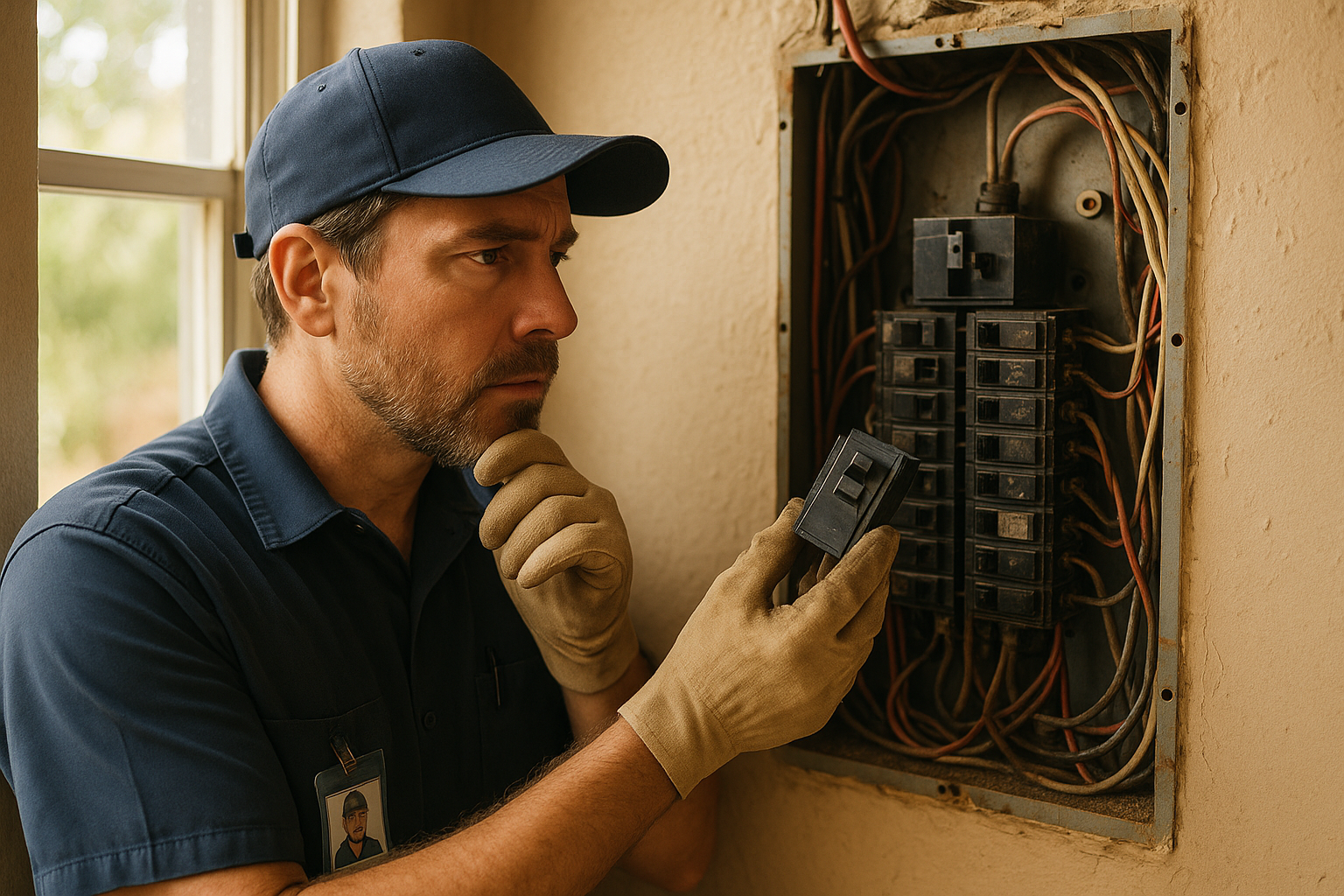
Many homeowners throughout Southwest Florida wonder: can old wiring cause serious problems in their homes? The answer is yes. Outdated electrical systems pose significant risks, from fire hazards to power failures, particularly in older homes built before modern electrical codes. Understanding the dangers of aging wiring is essential for protecting your family and property.
Quick Answer: Old wiring can cause house fires, electrical shocks, frequent circuit breaker trips, power surges, and appliance damage. Homes built before 1970 often contain outdated wiring types like knob-and-tube or aluminum wiring that no longer meet safety standards. These systems were designed for lower electrical loads and can overheat when powering modern appliances and electronics, creating serious fire risks.
What Types of Old Wiring Create the Biggest Safety Risks?
Understanding the specific types of outdated wiring in your home helps you recognize potential dangers. Different wiring systems present unique hazards that require professional attention.
1. Knob-and-Tube Wiring (Pre-1950s)
Knob-and-tube wiring was common in homes built before the 1950s. This system uses ceramic knobs and tubes to support and protect wires running through walls and ceilings. However, the insulation on these wires deteriorates over time, exposing live conductors. Furthermore, this wiring type lacks a ground wire, which is essential for modern electrical safety standards. Many insurance companies refuse to cover homes with knob-and-tube wiring still in use.
2. Aluminum Wiring (1960s-1970s)
During the 1960s and 1970s, builders installed aluminum wiring as a cost-effective alternative to copper. Unfortunately, aluminum expands and contracts more than copper when heated, causing connections to loosen over time. These loose connections create resistance, which generates heat and increases fire risk. The U.S. Consumer Product Safety Commission estimates that homes with aluminum wiring are 55 times more likely to have fire hazard conditions at electrical connections.
3. Cloth-Covered Wiring (1920s-1960s)
Cloth-covered wiring features rubber insulation wrapped in cloth fabric. Over decades, the rubber insulation breaks down and becomes brittle, crumbling away when touched. This deterioration exposes bare wires that can short circuit or spark, creating immediate fire hazards. Additionally, cloth wiring often lacks proper grounding, making it incompatible with modern appliances.
4. Two-Prong Outlets (Ungrounded Systems)
Two-prong outlets indicate an ungrounded electrical system, which was standard before the 1960s. Without a ground wire, there’s no safe path for excess electricity during a surge or short circuit. Consequently, this electricity can travel through metal appliances, water pipes, or even people, creating shock hazards. Modern electronics and appliances require grounded three-prong outlets for safe operation.
Can Old Wiring Cause House Fires? Understanding the Connection
The relationship between aging electrical systems and house fires is well-documented. In fact, electrical failures are among the leading causes of residential fires throughout the United States.
Old wiring causes fires through several mechanisms. First, deteriorated insulation allows bare wires to contact combustible materials like wood framing or insulation. Second, undersized wiring cannot handle modern electrical loads, causing the wires to overheat. Third, corroded connections create resistance, generating excessive heat at junction boxes and outlets. Finally, outdated circuit breakers may fail to trip during overload conditions, allowing dangerous levels of current to continue flowing.
Moreover, homes in Southwest Florida face additional challenges due to humidity and salt air exposure. These environmental factors accelerate wire corrosion and insulation breakdown. During our 20+ years serving Port Charlotte, North Port, Punta Gorda, Venice, Englewood, and Sarasota, we’ve witnessed countless examples of weather-accelerated electrical deterioration in older coastal properties.
The National Fire Protection Association reports that electrical distribution and lighting equipment caused an estimated 32,620 home fires annually between 2015 and 2019. Many of these fires resulted from aging wiring systems that were never upgraded to meet current demands. Therefore, proactive electrical inspections become crucial for homes more than 40 years old.
7 Warning Signs That Can Old Wiring Cause Problems in Your Home
Recognizing the symptoms of failing electrical systems helps you take action before a serious incident occurs. These warning signs indicate your wiring needs professional evaluation.
1. Frequent Circuit Breaker Trips
Circuit breakers that trip repeatedly signal that your system is overloaded. While occasional trips are normal, frequent trips indicate that your wiring cannot handle your household’s electrical demand. Old wiring with insufficient amperage forces circuits to work beyond their capacity, causing protective devices to shut down power repeatedly.
2. Flickering or Dimming Lights
Lights that flicker, dim, or brighten unexpectedly point to connection problems or inadequate wiring. This issue often worsens when you operate large appliances like air conditioners, which are essential in the Southwest Florida climate. Flickering lights specifically indicate loose connections that generate heat and pose fire risks.
3. Discolored or Warm Outlets and Switch Plates
Outlets or switches that feel warm to the touch or show discoloration indicate dangerous heat buildup. Similarly, scorch marks around outlets signal that arcing or overheating has already occurred. These conditions require immediate professional attention, as they represent active fire hazards.
4. Burning Smell or Unusual Odors
A burning smell near outlets, switches, or your electrical panel indicates overheating wires or components. Never ignore this warning sign. Additionally, a fishy odor can indicate overheating electrical components. Both situations demand immediate professional inspection to prevent potential fires.
5. Buzzing, Sizzling, or Crackling Sounds
Electrical systems should operate silently. Buzzing sounds from outlets, switches, or panels indicate loose connections or arcing electricity. Crackling or sizzling sounds are even more serious, suggesting active electrical arcing that can ignite surrounding materials.
6. Shocks or Tingling Sensations
Experiencing mild shocks when touching appliances, switches, or outlets indicates grounding problems in your electrical system. Even small shocks should never be considered normal. These sensations warn that your system lacks proper grounding, creating potentially lethal conditions during electrical faults.
7. Outdated Electrical Panel with Fuses
Homes still using fuse boxes instead of modern circuit breaker panels definitely need upgrades. Fuse boxes were designed for electrical loads one-third to one-fifth of what modern homes require. Furthermore, people often install incorrect fuse sizes to stop nuisance trips, which eliminates critical overcurrent protection.
If you’re experiencing multiple warning signs, choosing qualified local electricians becomes your next important step toward protecting your home and family.
How Does Old Wiring Affect Your Home’s Modern Electrical Needs?
Today’s homes consume significantly more electricity than houses did 40 or 50 years ago. This increased demand creates serious problems for aging electrical systems.
Homes built in the 1960s typically had 60-amp electrical service, while 1970s homes often featured 100-amp service. In contrast, modern homes require 200-amp service to safely operate contemporary appliances, computers, entertainment systems, HVAC equipment, and electric vehicle chargers. Consequently, old wiring simply cannot deliver the power today’s households need.
Consider the electrical load in a typical Southwest Florida home today. Central air conditioning alone requires substantial amperage during our hot, humid summers. Add refrigerators, washing machines, dryers, dishwashers, microwaves, computers, televisions, phone chargers, and outdoor lighting, and the demand quickly exceeds what older systems can handle.
Moreover, many homeowners want to install EV chargers for electric vehicles or standby generators for hurricane protection. These additions require dedicated circuits with proper amperage that old wiring systems cannot provide. Therefore, attempting to add modern electrical features without upgrading the underlying wiring creates dangerous overload conditions.
Old wiring also lacks the surge protection capabilities that sensitive modern electronics require. Power surges can destroy computers, televisions, and smart home devices. However, older systems without proper grounding cannot accommodate whole-home surge protection devices, leaving your valuable electronics vulnerable.
What Should You Expect During an Electrical Safety Inspection?
Professional electrical inspections identify hazards before they cause damage or injury. Understanding the inspection process helps you know what to expect.
A comprehensive electrical inspection begins with examining your service panel. The electrician checks for proper labeling, signs of overheating, correct breaker sizes, and any evidence of amateur modifications. Next, they test outlets throughout your home for proper grounding, correct polarity, and adequate voltage. GFCI outlets in bathrooms, kitchens, and outdoor areas receive special attention to ensure they function properly.
The inspection continues with examining visible wiring in attics, crawl spaces, and basements. Electricians look for deteriorated insulation, improper splices, undersized wiring for circuit loads, and any modifications that violate electrical codes. They also check connection points in junction boxes, looking for loose connections, corrosion, or overheating evidence.
Furthermore, the inspector evaluates your home’s overall electrical capacity compared to your current needs. They calculate the total amperage your household requires and determine whether your service panel and main wiring can safely deliver that power. This evaluation helps identify whether you need service upgrades or panel replacements.
During inspections throughout North Port, Venice, and Englewood, we frequently discover that older homes need substantial electrical work. However, identifying these issues through professional inspection allows homeowners to address problems systematically before emergencies occur. The inspection report prioritizes repairs, helping you understand which issues require immediate attention and which can be scheduled for later.
How Much Does It Cost to Replace Old Wiring in Southwest Florida?
Understanding the investment required for electrical upgrades helps homeowners plan appropriately. Several factors influence the total cost of rewiring projects.
Complete home rewiring typically costs between $3,000 and $10,000 for average-sized homes in the Port Charlotte, Punta Gorda, and Sarasota areas. However, the actual cost depends on your home’s square footage, the wiring’s current condition, wall construction, and the scope of work required. Homes with plaster walls or concrete block construction cost more to rewire because accessing wiring requires more labor.
Partial rewiring projects address specific problem areas rather than the entire house. For example, rewiring a kitchen might cost $1,500 to $3,000, while updating a single bedroom could range from $500 to $1,200. These targeted projects work well when budget constraints prevent complete rewiring but critical areas need immediate attention.
Electrical panel upgrades from 100-amp to 200-amp service typically cost $2,000 to $4,000, including the new panel, meter base, and necessary permits. This upgrade provides the foundation for safely powering modern electrical loads and often accompanies partial or complete rewiring projects.
Additionally, many homeowners choose to combine rewiring with other electrical improvements. Adding GFCI outlets, installing whole-home surge protection, upgrading lighting systems, and adding dedicated circuits for specific appliances can be completed efficiently during rewiring projects. Combining projects often reduces overall labor costs compared to scheduling separate service calls.
It’s worth noting that rewiring investments protect your most valuable asset while providing peace of mind. Moreover, updated electrical systems increase home value, lower insurance premiums, and prevent costly emergency repairs or fire damage. Many insurance companies offer discounts for homes with recently updated electrical systems, helping offset upgrade costs over time.
How Can You Prevent Electrical Problems While Living with Old Wiring?
While professional upgrades provide the best long-term solution, homeowners can take interim steps to reduce risks before complete rewiring occurs.
First, avoid overloading circuits. Distribute high-wattage appliances across different circuits rather than plugging multiple devices into the same outlet. Use power strips with built-in circuit breakers for electronics, but never daisy-chain multiple power strips together. Second, unplug appliances and electronics when not in use to reduce continuous electrical load.
Third, schedule regular electrical inspections, ideally every three to five years for older homes. Professional inspections identify developing problems before they become emergencies. Fourth, replace any two-prong outlets with properly grounded three-prong outlets. However, this requires verifying that ground wires exist or installing GFCI protection where grounding isn’t available.
Fifth, install smoke detectors on every level of your home and inside bedrooms. Test them monthly and replace batteries annually. Interconnected smoke detectors provide the earliest warning if electrical fires occur. Sixth, keep fire extinguishers accessible, particularly near the kitchen and electrical panel. Ensure family members know how to use them properly.
Seventh, never attempt DIY electrical work on systems you don’t understand completely. Amateur electrical work often creates more hazards than it solves. Finally, develop a relationship with a trusted local electrical contractor who understands your home’s specific challenges and can respond quickly when problems arise.
Frequently Asked Questions About Old Wiring and Electrical Safety
Can old wiring cause high electric bills?
Yes, old wiring can increase electric bills significantly. Corroded connections create resistance that wastes electricity as heat rather than powering devices efficiently. Additionally, outdated wiring forces appliances to work harder, consuming more energy to operate properly.
How can I tell how old my home’s wiring is?
Check your electrical panel for manufacturing dates and examine visible wiring in your attic or basement for insulation type. However, a professional electrical inspection provides the most accurate assessment of your wiring’s age and condition throughout your home.
Can old wiring cause power surges?
Old wiring with deteriorated insulation and loose connections can contribute to power surges within your home. These internal surges differ from external utility surges but can still damage sensitive electronics and appliances over time.
Is it safe to live in a house with old wiring temporarily?
Living with old wiring requires extra caution and should be temporary only. Avoid overloading circuits, install smoke detectors throughout your home, and schedule professional inspection immediately to identify the most critical hazards requiring attention.
Can old wiring cause appliances to malfunction?
Yes, old wiring delivers inconsistent voltage that causes appliances to perform poorly or fail prematurely. Modern appliances and electronics require stable power that aging electrical systems cannot reliably provide, leading to shortened equipment lifespan.
Do I need to rewire my entire house or just problem areas?
A professional electrician should evaluate your entire system to determine the appropriate scope. Sometimes targeted rewiring of specific circuits addresses immediate safety concerns, while complete rewiring provides the best long-term solution.
Will upgrading my electrical panel solve old wiring problems?
Panel upgrades improve safety and capacity but don’t address deteriorated wiring throughout your home. The best approach typically combines panel upgrades with rewiring problem circuits or complete home rewiring depending on conditions.
Trust Caliber Electric for Your Home’s Electrical Safety
Can old wiring cause serious problems? Absolutely, and addressing these issues should never be delayed. Our family-owned company has served Southwest Florida homeowners for more than 20 years, providing expert electrical services throughout Port Charlotte, North Port, Punta Gorda, Venice, Englewood, and Sarasota. We understand the unique challenges facing older homes in our coastal climate and have the expertise to upgrade your electrical system safely and efficiently.
Our fully licensed electricians provide comprehensive electrical inspections, panel upgrades, complete home rewiring, and all the electrical services your home needs. Whether you’re experiencing warning signs of electrical problems or simply want peace of mind about your older home’s safety, Caliber Electric delivers trustworthy service backed by decades of experience. Contact us today to schedule your electrical safety inspection and protect what matters most: your family, your home, and your peace of mind.